#Towns and landmarks Currentsince 2026-11-22
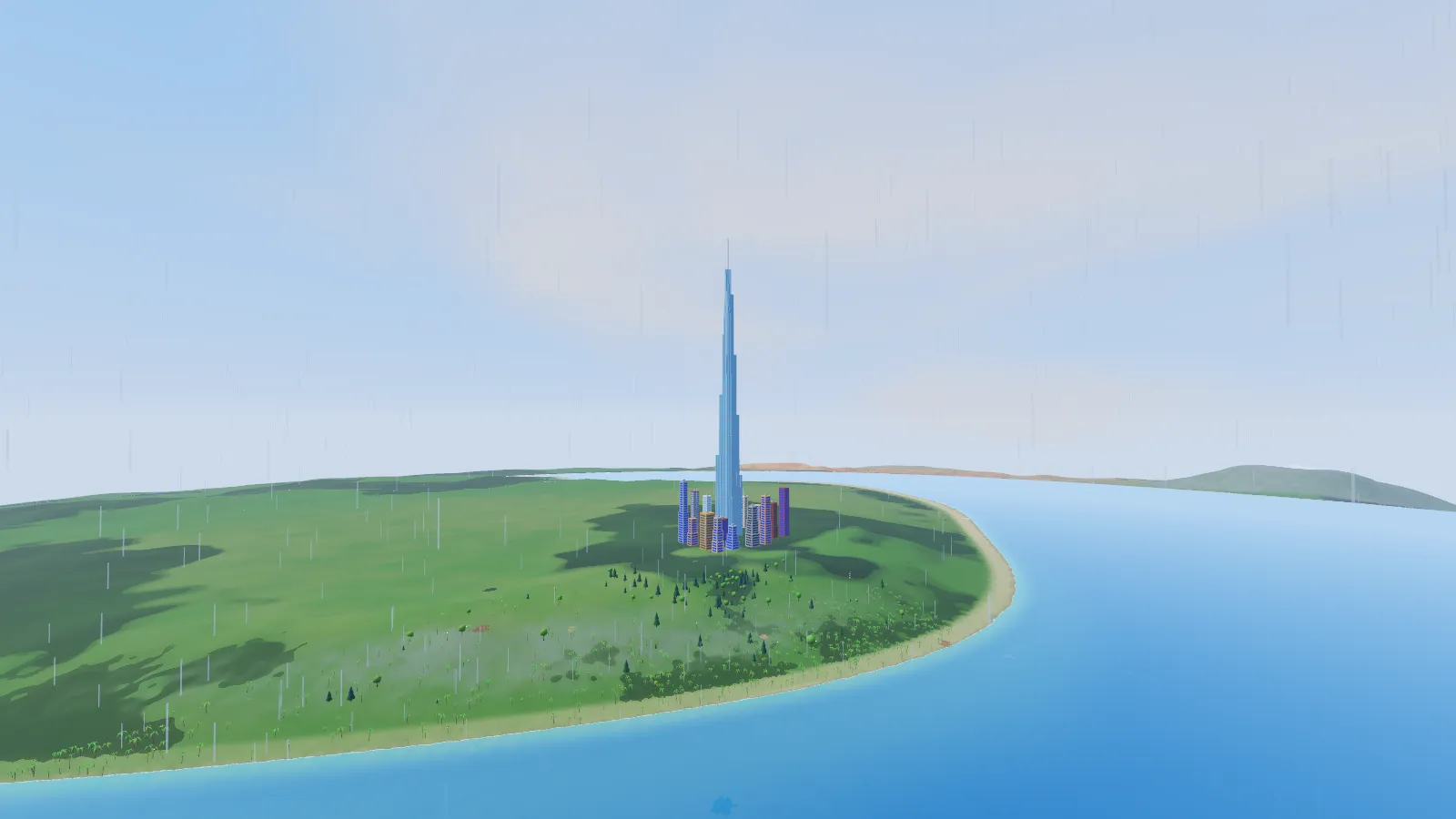
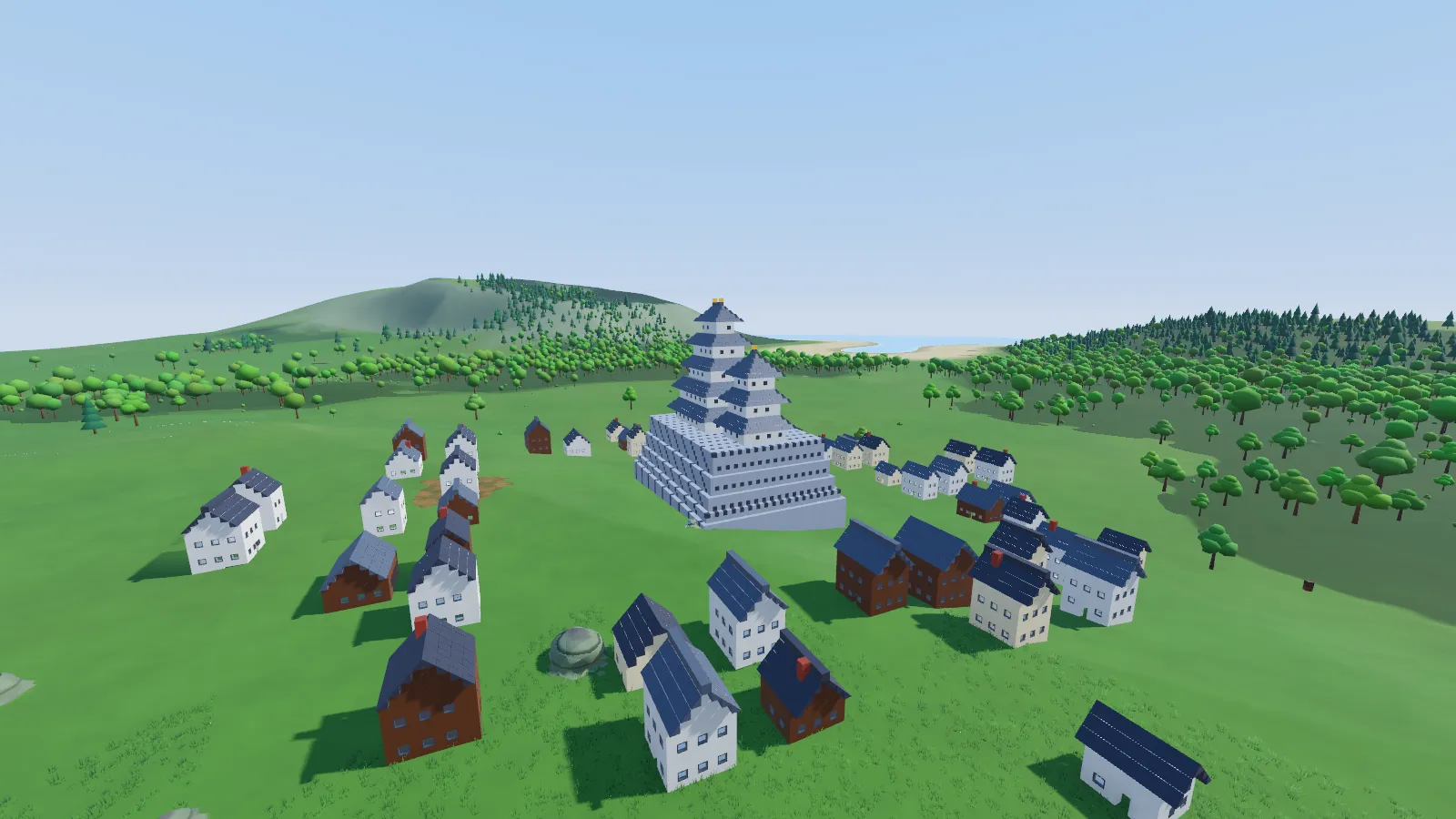
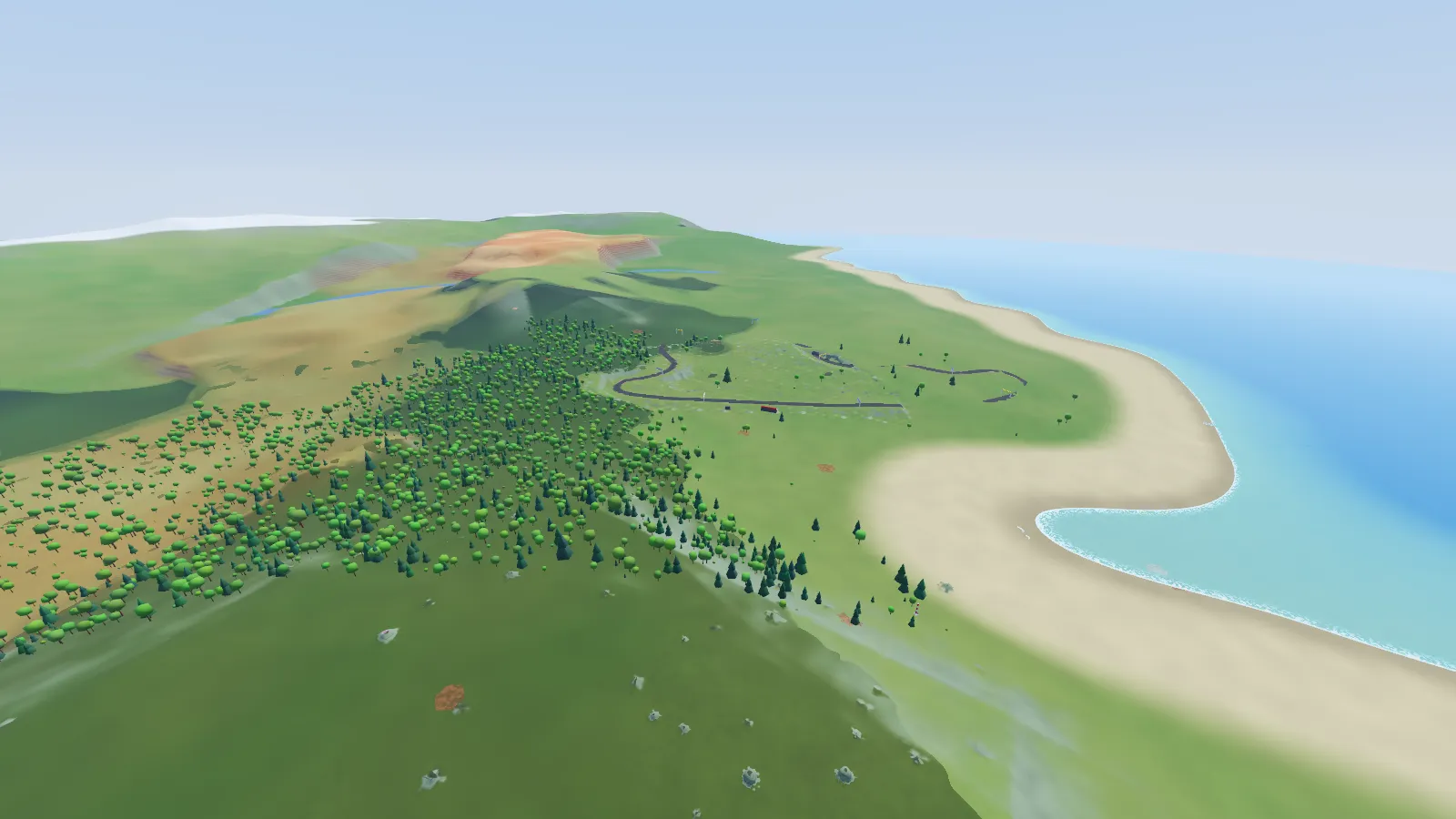
. A new world (not a Learn world, not a scene) is planned, chosen in the menu's New world: Landmarks (on by default) and Towns (none, few, some, many: 0, 8, 16, 32 towns and villages).
- Landmarks, 24, on a Fibonacci sphere of points turned at random (off
the ice caps), each moved to the nearest ground within 30 km that is dry
and level enough under it (Christ the Redeemer wants a hill), at least
3 km clear of every other place and 4 km of the start and the landing
point (on the real Earth: where they stand, the nearest ground that will
do within 2.4 km). Each stands alone: no town of little houses round it
(since 2026-11-26; New York's towers are the landmark's own). Near real size, the big ones of 2 m blocks (Large
Armor): the
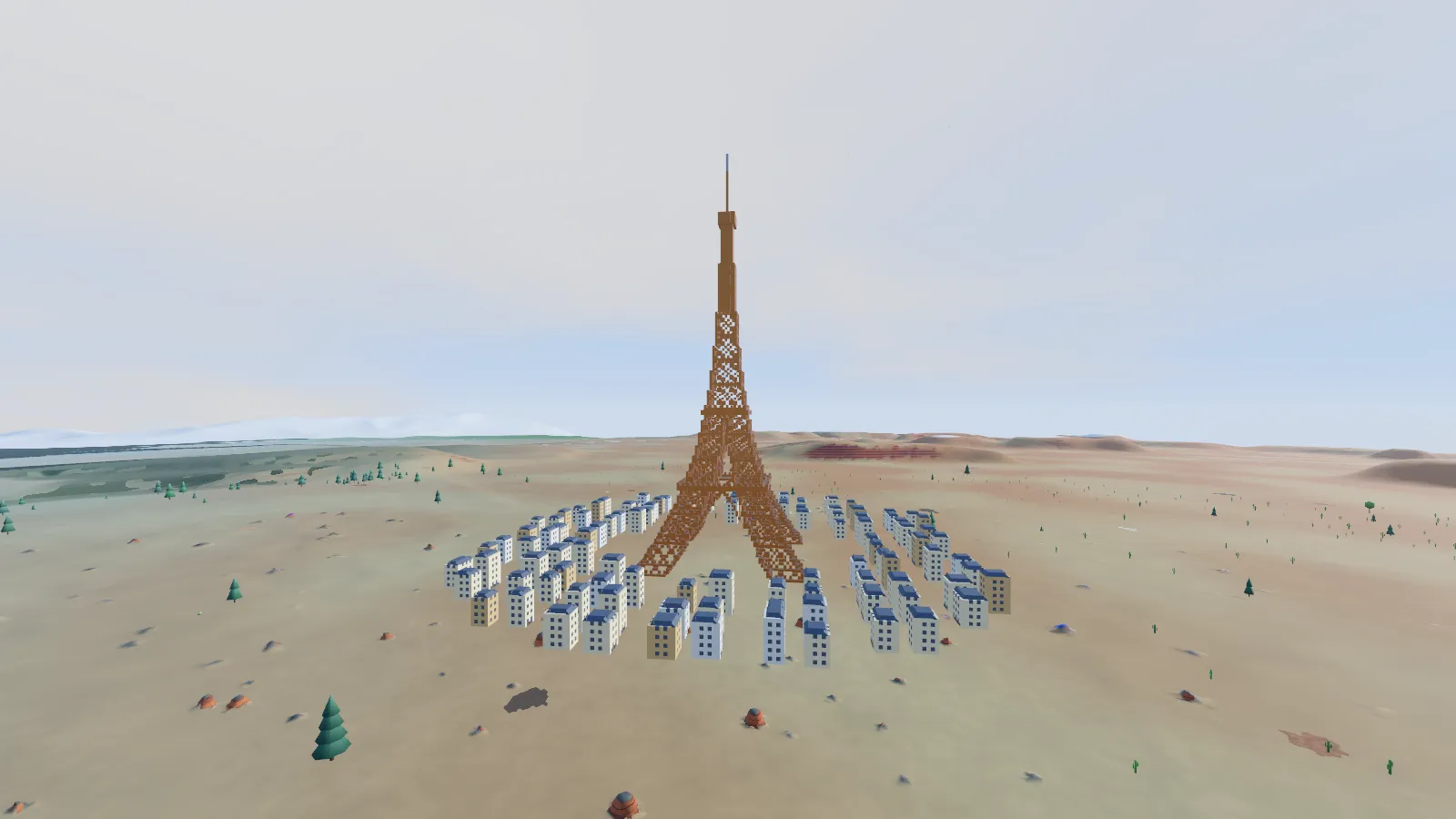
Eiffel Tower (330 m, lattice legs, arches, floors) in Paris; the Great
Wall (3 km in 60 m segments over the ground, watchtowers); Giza's three
pyramids and the Sphinx; New York (a 1.4 km island of towers on avenues,
Midtown and Downtown highest, a park; the Empire State Building, a tower
crowned like the Chrysler Building, One World Trade Center; the Statue of
Liberty off its tip); Big Ben and the Houses of Parliament in London; the
Colosseum (ruined on one side) in Rome; Pisa's tower (leaning 4 degrees),
cathedral and baptistery; the Taj Mahal with its pool; the Sydney Opera
House; Christ the Redeemer over Rio; Stonehenge; the Burj Khalifa (828 m)
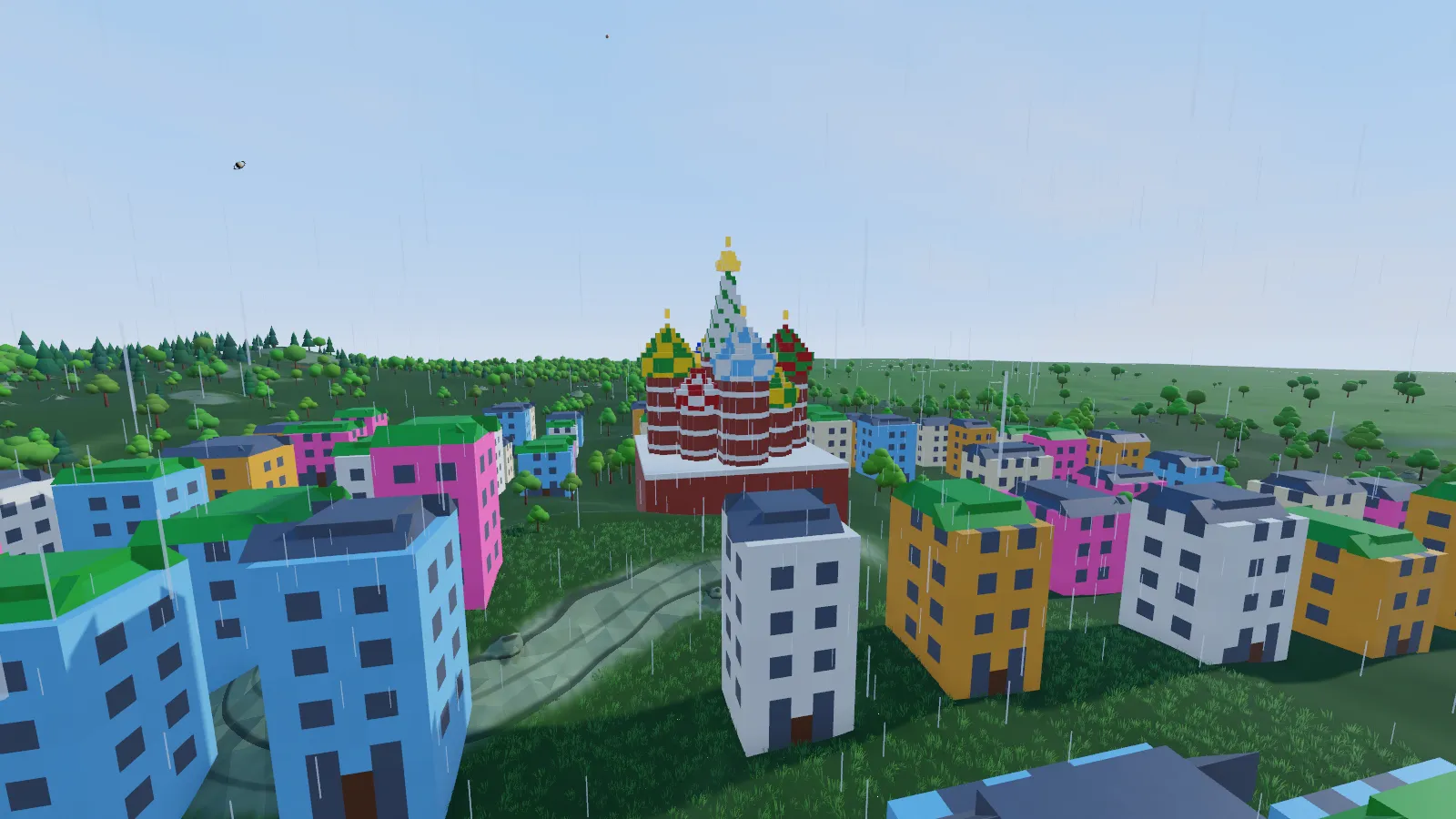
in Dubai; the Moai; St Basil's Cathedral in Moscow. And, spread to fill
the map's gaps (none nearer another than some 1,750 km on the real
Earth, but Berlin, 880 km from Paris):
- Berlin: the Brandenburg Gate (26 m: twelve columns, five ways through, the Quadriga in verdigris) and the television tower (368 m, the steel ball at 200 m, the red and white antenna) 120 m off.
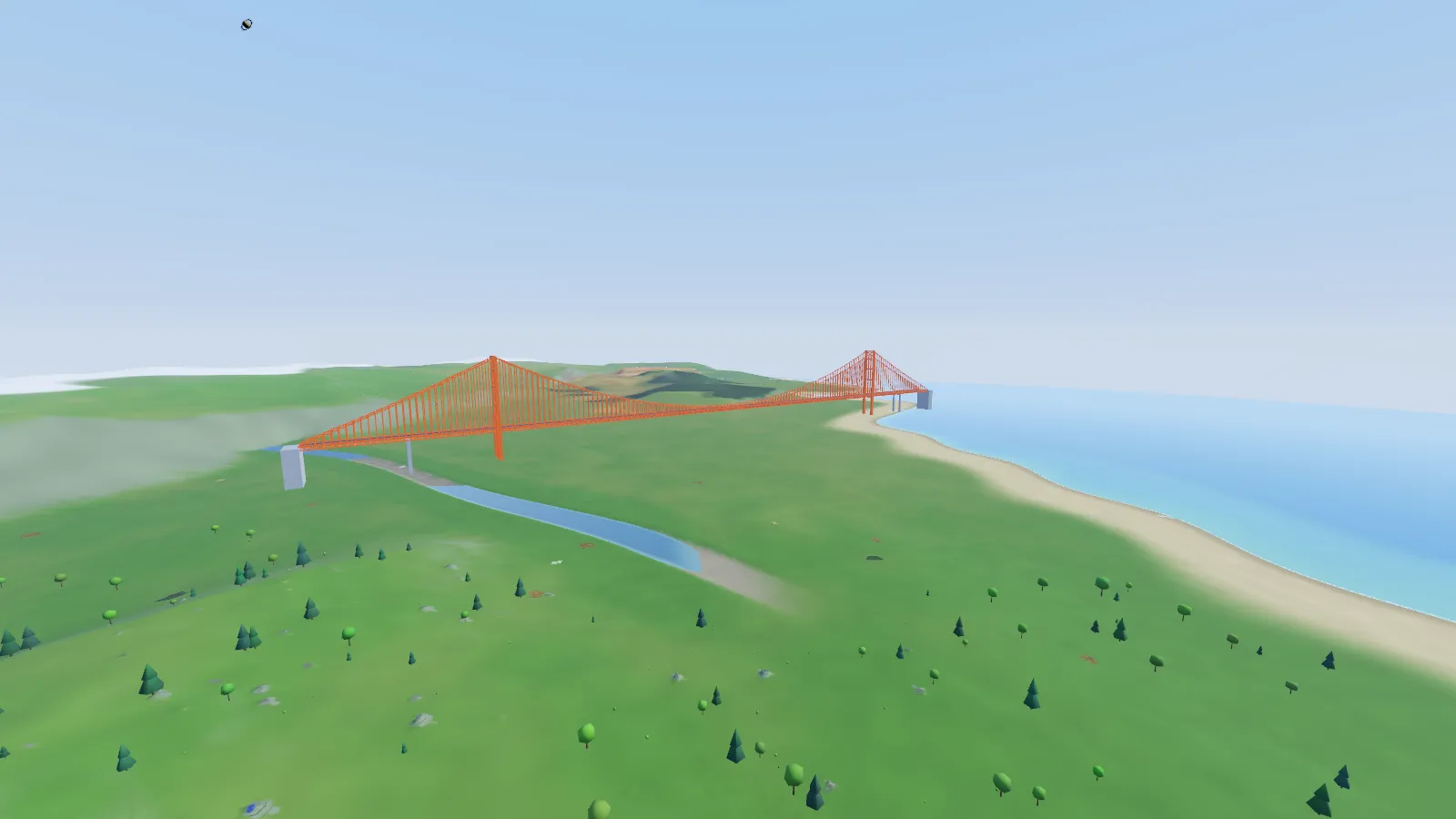
- The Golden Gate Bridge: towers 227 m high and 1,280 m apart, the deck 66 m up, the main cables and suspenders, anchorages at its ends: 2 km in one grid, in international orange. Needs only 300 m of firm ground round its middle: its ends may reach over low ground or water.
- Chichen Itza: El Castillo, nine terraces, a stair each side, the temple on top, serpents' heads at the foot of the north stair; jungle.
- Machu Picchu (wants a hilltop, like the Redeemer): terraces
stepping down the slopes (
follow: each column on its own ground), the plaza, stone houses with thatched roofs, the Temple of the Sun. - Angkor Wat: a moat 440 m across, the causeway and gate, three galleried tiers with stairs and doorways, five lotus-bud towers.
- Himeji Castle: the curving stone base, the white main keep of five storeys under wide grey eaves, a lesser keep.
- The Great Mosque of Djenne: mud brick on its platform, three towers on the front, buttresses rising in pinnacles tipped white, palm beams sticking out.
- Great Zimbabwe: the oval Great Enclosure (11 m high in the east, chevrons along its top), the narrow passage, the conical tower, hut circles.
- Hallgrimskirkja: the tower with its columns stepping down like basalt, the nave and apse.
- Borobudur: six square terraces with balustrades, three round ones with 72 latticed stupas, the great stupa, stairs up all four sides.
- Towns at random on dry land, their style by the country: cabins (cold, mountains), white cubes (desert), bright flat-roofed houses (tropics), else plaster, brick and stone villages and towns (Paris, London, Rome, Moscow styles). Houses are of 1 m blocks with windows, a doorway, gable or flat roofs; tall ones (4+ storeys) and towers of 2 m blocks with painted windows. Streets on a square grid of lots.
- Paints for them: sandstone, terracotta, brick, cream, slate, marble, ochre, sky blue (at the end of the list: in survival found like the other finishes).
- Built lazily: a place is built when a player is within 12 km, 3000 blocks a tick at the most, as static grids (one per building or part) whose blocks have no names; taken down when every player is beyond 18 km, if no grid of it changed. Saved with the world (the plan and what stands).
- Trees: a place is a clearing (told to the clients): no tree on a building's ground, and only some (a quarter in New York, half in a town, most round a landmark) between.
- The compass shows each place near (named after its landmark and town). In a sandbox every place has a beacon: a red and white mast 12 m tall at its edge, an antenna named after the place, a battery and solar panels, kept charged; it is heard by any antenna on any channel up to 60 km (its stations list), sends always, and is heard by passive radars that far; the compass shows every place however far.
- The compass names a far place (a beacon's) only while one faces it within 10 degrees (its bearing along the ground on a planet, the whole direction in space); within 6 km always. Each name hangs to the right of its tick, a line down from the tick to its bar, the right-most on top (so no line crosses a name above it).
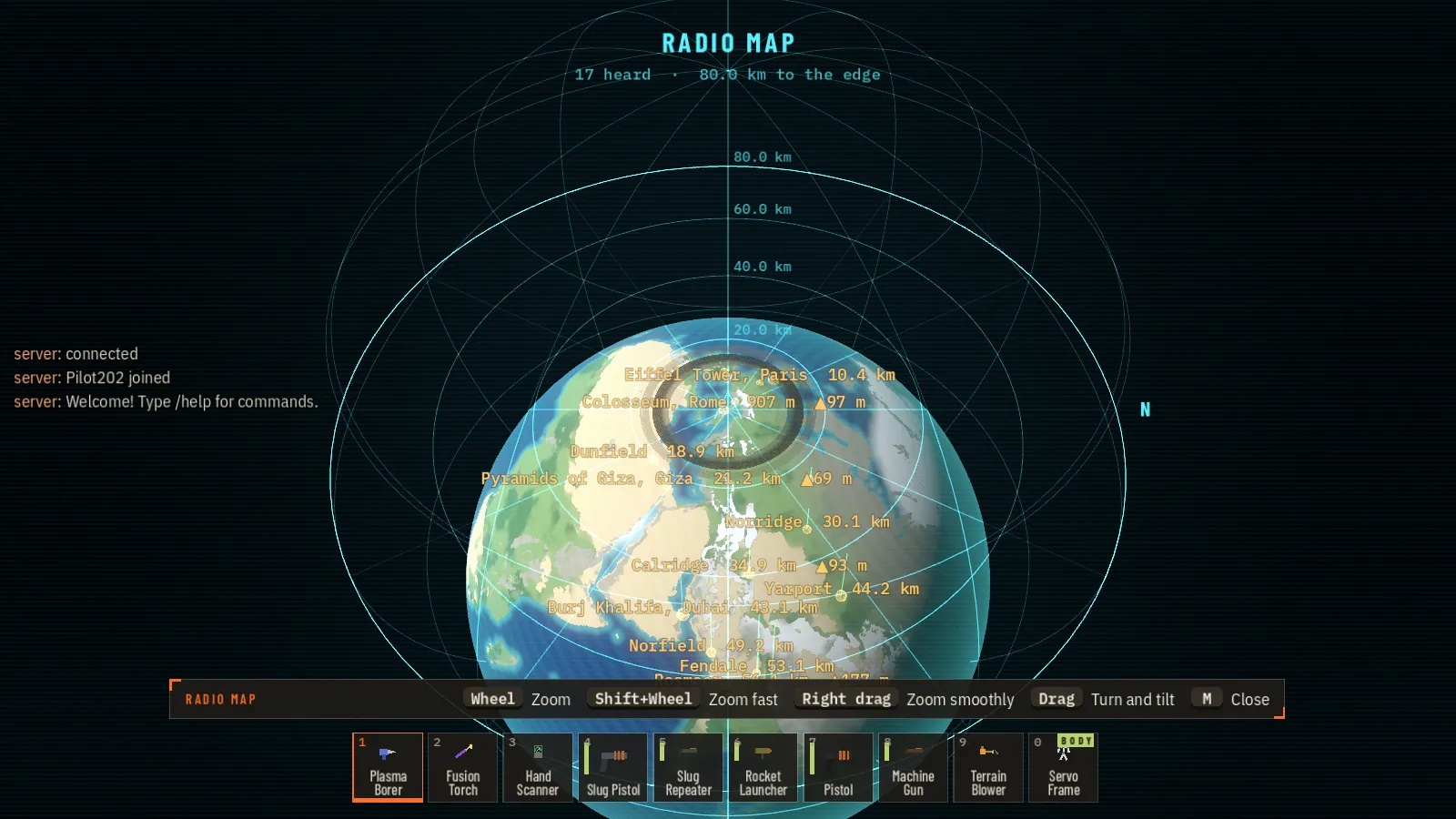
- The radio map (M on foot, F6 anywhere): a 3D
hologram in a scene of its own (a SubViewport with its own world, over
the game; the tool in hand put away, the key hints its own: Wheel zoom,
Shift+Wheel zoom fast, Drag turn and tilt, M close). What one hears on
the radio (sent twice a second): the stations the powered antennas of the
construction one stands on or sits in hear, and in a sandbox the
places' beacons within 60 km (the suit's receiver), and as far the
space traffic's drones by the antenna each carries (its transponder;
asked 2026-11-28), green ("Gnat 3", "Mule 8"): no one's, neither friend
nor foe (there is no friend or foe for constructions). A disc round oneself,
heading-up, north marked, rings of round distances, and a faint
wireframe sphere of the edge's distance round oneself (what is inside it
is within that reach every way, up and down too), glowing lines; each source a pulsing blip on a stem
from the disc to its height, its name, distance and height (near: along
the ground and over it; beyond 20 km in straight lines, where the
planets are). Zoomed out, the planets and moons where they are, each
named, drawn as the game draws them from afar (a copy of each one's own
material: the Earth's seas, land and ice, the rocky bodies' maps, the
giants' bands, Saturn's rings), turned as they
are in the world and lit by the sun, a faint hologram rim over them
(a rim glow, scan lines, a flicker); no
more detail up close than from afar. One's own planet shows once it
comes to fit the view. A body with no look of its own is the hologram
alone. Names that
would lie over one another: the nearer one's shown. The wheel zooms out
from oneself, 100 m to past the last planet (Shift: faster); a drag turns
it (sideways) and tilts it (up and down, from straight above to straight
under the disc). M, F6 or Esc closes it.
Since 2026-11-26: R turns the radio off ("give the player means to
turn off the radio so on map the things aren't all shown"): off, no
source is drawn (blips, stems, names), the title line says RADIO OFF;
the planets, the ground and the constructions close by still are. Kept
in the settings (
main.map_radio); a key hint "R Radio on/off" while the map is up. Only the map: the compass and the antennas' station lists are as before. (Seated too, since 2026-11-24: weapons auto moved from M to B, which only builds on foot; since 2026-11-26 auto is the fire control's and B seated does nothing.) Since 2026-11-26 (later): T tunes how far the radio picks up ("tune his radio so that it only picks up till x distance"): 1, 2, 5, 10, 20, 50, 100, 500 km or all it hears, Shift+T back; what is farther is not heard (left out of the map and its count, the client's own: what the server sends, the antennas' lists and scripts are as before); the title line says "radio up to 5.0 km (T)", and a ring over the disc marks where it stops (drawn over everything: on the disc, the ground's relief near the middle hid it). Kept in the settings. Tuned also by the RADIO slider in the inventory window (under the slots, the same steps; the two keep in step), and it holds for the compass too: a place (a town, a beacon, a challenge) farther than it is not on the compass; a danger (a raid, a meteor) always is; the scanner's finds, buoys, Proctor's marks and the wreck are no radio and stay.--autotest --host --radiorangeshots. Since 2026-11-24: the world is not drawn behind it (the main view's 3D off while it is up), a holo-table's backdrop instead (dark teal-black, lighter in the middle, faint scanlines, a slow band of light, grain); names smaller zoomed in (half size at 1 km and in, whole from 20 km; the room they take for hiding crowded ones likewise); the constructions close by every frame (were 4 times a second; 10 times past 6,000 blocks); and the ground round one on a planet, where its globe is too big to show (zoomed in under its radius / 1.8, faded in to / 2.2): a hologram of the real relief (the natural height on a 97 by 97 grid out to the edge, detail finer than its spacing left out, the sea flat at its level; north up and turned to one's heading; fetched again as one zooms by a tenth or every 1.5 s, some 10 ms) drawn byshaders/map_terrain.gdshader: contour lines (a round step, some 30 across the disc, every fifth bolder), slopes lit faintly from the sun's side, the sea bluer and its shore a bright line, fading at the disc's edge. Since 2026-11-25: heights are true to scale at every zoom (a stretch to make the relief stand out was tried and taken out the same day: it should be accurate). The ground is where it truly is, the planet's curve and all (each point of the grid from one), and the sources too (in straight lines now at every zoom, not laid out along the ground near by). The ground hands over to the globe with no jump: by how big the planet is on the disc (its radius in hologram units, the disc's 10), the globe fades in over the very same ground, as big and where it is, as the ground fades out, from 30 to 12 (the Earth: from some 21 to 53 km to the edge); its own look fades as a whole (the instance's transparency). The other bodies fade in by the same rule. The zoom glides: the wheel sets where it goes and a spring in the scale's log takes it there (soft start, soft stop, no overshoot); a notch alone is a scale of 1.15, a quick run of them (under 0.18 s apart) grows each by 1.3 times up to 6 times, Shift three times; a right drag zooms smoothly (120 px a scale of e, more for a quick flick), a touchpad's two fingers or pinch too. The ground is fetched out to where the zoom is going. The backdrop covers the screen at any interface scale (it kept the size the map had when built), the 3D is rendered at the screen's pixels, and the title, ring distances and N are on a layer over the hologram (they were drawn under the backdrop). - Windows count as hull (they do nothing by the tick): a static grid of armour and windows sleeps.
- Cost: all 45 places of a world with every landmark and many towns
are 760k blocks, never all standing. New York, the biggest, is 171k
blocks in 88 grids: built in about 0.2 s over some 60 ticks; standing,
0.1 ms a server tick; on the GPU some 1M triangles more. The planning
takes 0.2 s.
/place NAME [day]goes to one (sandbox).
#Places that belong, streets, and challenges Planned2026-11-23
The survival world's atmosphere: places where they would be on the real Earth, towns that grew rather than were ruled, streets on the ground, and in them challenges that hold locked recipes, trophy blocks and paints. Decided: a challenge gives both locked recipes and trophies; what it unlocks is the world's (as paints are); streets are terrain roads.
Where places go. Today a place takes the first dry, level, ice-free
spot and its style follows the country. Instead: sample many spots (some 200) in a place's search area, drop those fits refuses, score the
rest, take the best. The kind of town decides where it looks, and its
style follows from the kind:
| Kind | Wants | Style |
|---|---|---|
| Harbour town | coast 50-600 m inland, a bay (sea on several bearings), low ground | Tropical near the equator, else Village/London |
| River town | a river valley, both banks, lowland | Paris, London, Rome, Moscow |
| Oasis | desert > 0.4, by a lake or the lowest ground about | Desert (dense, courtyards) |
| Desert coast city | desert and coast together | Desert, Modern (Dubai-like) |
| Mountain village | mountains > 0.3, on a level shelf in a valley, below the snow | Cabin |
| Farm village | plains, a gentle slope, near a river or lake | Village |
| Crossroads town | between two other places, level | any temperate |
- Landmarks in their real setting: by the coast the Sydney Opera House, New York (Liberty offshore), Rio with the Redeemer on a hill over it, the Moai (an island if there is one), Dubai (desert coast); Giza in desert by a river if one is there; the Taj Mahal by a river; Paris, London, Rome, Pisa on river lowland, Moscow the same further north; the Great Wall along the edge of the hills; Stonehenge on open plain. No spot fits: today's rule.
- A nice spot scores for a view (higher than the land about:
fitsgives it), water in sight, hills behind on one side, level ground in the core, trees round it (not in it), and evenly apart from other places. Weights per kind.
Towns: streets first, houses along them.
- A main road through the place following the ground (each step the least steep heading within 25 degrees), leaving toward the nearest other place; side streets off it at 60-110 degrees, shorter, some dead ends; a square at the middle (church, well, market or the challenge).
- By style: old towns (Rome, Moscow, Paris) bend and ring round the middle; desert towns are tight alleys round courtyards and the oasis; harbour towns run along the shore with a quay; cabins string along one valley road, far apart. Only Modern, New York and the odd planned town (about one in five) keep a grid.
- Houses face the street: set back 1-4 m, spaced, turned (8 degrees at most), sized and storeyed unevenly; bigger and closer in the middle, fewer and smaller to the edge; yards, gardens, a lone farmhouse beyond.
- Streets on the ground: each road a line with a width and a surface
(cobble, asphalt, dirt, sand), told to the clients with the clearings;
the terrain is levelled across it and painted by the terrain shader, no
tree on it. The sim levels by the same function, so wheels run on it.
The painting is built (first used by the hill circuit): the mesher gives each vertex of the
chunks up to 16 m cells how far inside a road's edge it is, how far
along, the surface and how far inside a kerb (a
Kerbroad, a narrow line along another's edge, red and white); the shader cuts the edge per pixel. Town streets do not use it yet. - Roads between places: dirt tracks joining near towns and landmarks, and out to a challenge beyond a town: something for a rover to follow.
Challenges: the points of interest. A small site in or near a town: a terminal (computer, display, buttons or touch, speaker, sensors, antenna), what its course needs (rings, buoys, pads) and a reward locker. On the compass as a place ("Ring run, Bremwick") unless secret.
- Warded: its grids cannot be hurt, built on, taken apart, painted or have their programs changed (flag, saved, checked where is). Explosions pass it by.
- The script judges, the sim pays: a
Command::Award{level}that only a warded grid's computer may give; the site's reward table (in the sim, not the script) says what each level unlocks. Once unlocked it is the world's for good (Poiskeeps blocks and trophies beside paints). Best times stay on the terminal for the next try. - Locked recipes: a few advanced blocks the fabricator will not make in survival until a challenge gives them (it says where): jet engine, ion thruster, shield generator, radar, warhead, the teleporter's parts. Each needs the tier before it to win (a plane for the ring run, a rocket for ground control), so the places become the ladder's gates; the milestone hints name the place.
- Trophy blocks, found only so: chess table, jukebox (the synth's songs), neon sign, hologram projector, statue, trophy cup, fountain, aquarium, arcade cabinet (a game on its screen).
- New finishes: chessboard, race stripes, aurora, lava, circuit, stained glass, gold leaf, phosphor green, starfield, desert camo, tiger, hazard stripes.
- Secrets: not on the compass; found by clues (a note on a house's display, a number station on the radio, a gap in a wall, light at an hour). They give the best finishes and trophies; a locked recipe is never only behind a secret.
Twenty challenges (what one needs to take part; S: secret):
- Ring run (a town in hills): fly through glowing rings over the roofs, timed, bronze, silver, gold. A plane. Jet engine; gold: race stripes.
- Grandmaster (a square): beat the terminal at chess on a touch display, three strengths. Wits. Chess table; the strongest: chessboard. (It thinks over many ticks within the 5 ms a run.)
- Desert rally (an oasis): a rover through gates across the dunes and back. Desert camo, bigger wheels.
- Bullseye drop (a farm village): drop a crate from the air on a target in a field, scored by distance. A plane or hopper and an ejector. Parachute, ejector.
- Regatta (a harbour): round the buoys in a boat, timed. Propeller, rudder upgrades.
- Dark lighthouse (a harbour, S): power its socket and the beam sweeps the sea, lighting a wreck offshore with a vault. Aurora, aquarium.
- Fox hunt (S): a weak transmitter on an odd channel in the hills, found by bearings from two antennas. Radar.
- Number station (S): a beacon reads numbers at night; decoded (the key painted on a wall in some town) they open a terminal's vault. Phosphor green.
- The program (a town hall): the terminal asks on the radio, the player's own computer must answer in time (sort these, sum those, steer that light). A computer and a script. Arcade cabinet, circuit.
- Spire landing (Burj Khalifa, Empire State, Eiffel Tower): land softly on a pad on top, a sensor judges the speed. A hopper. Gyro, landing gear upgrades; gold leaf.
- Ground control (an observatory, late): put a satellite with an antenna in orbit; the station must hear it pass over N times. A rocket. Ion thruster; starfield.
- The deep shaft (a mountain village): an old mine with depth marks; reach the bottom chamber and bring up its core. A drill and the depth tools. The next drill; lava.
- Contract (a town depot): deliver N of an item to its connector in time; repeatable. Logistics. Cargo and sorter upgrades.
- Moon pad (a plain): touch down on a small pad on a pillar under a speed limit, with little fuel. A hopper. Thruster upgrade.
- Labyrinth (Rome): a walled maze whose walls its machine moves every minute (pistons under the floor); reach the middle on foot. Statue; marble.
- Echo (a cathedral): lamps and speakers play a tune, played back on buttons, longer each round. Jukebox; stained glass.
- Hold the square (a town, once raiders come): hold it against waves for some minutes. Turrets. Shield generator.
- Solstice (Stonehenge, S): at sunrise the sun through the heel stone lights a slab; who stands on it then opens the barrow. Sun-gold.
- Hidden chamber (Giza, S): the ore scanner shows a void in the Great Pyramid; one unwarded block in its wall leads in. A scanner. Hologram projector; tiger.
- The old map (S, all over): scraps of a map in crates in five towns' houses; together they mark a vault far from any town. The rarest finish and the trophy cup.
Later perhaps: a drone course through a ruined building; a weighbridge (the lightest ship to lift a load); a crane-stacking puzzle; through Liberty's torch.
Order of work: scored placement and kinds; streets and houses along
them; terrain roads (clients and sim); warded grids, Award, reward
tables, locked recipes; one challenge end to end (the ring run), then
Grandmaster, then the rest. (2026-11-23: the challenges are built, see
"Challenges" below; the placement by kind, the streets and the trophy
blocks are still to come.)
#Challenges Currentsince 2026-11-23; at the landmarks since 2026-11-26
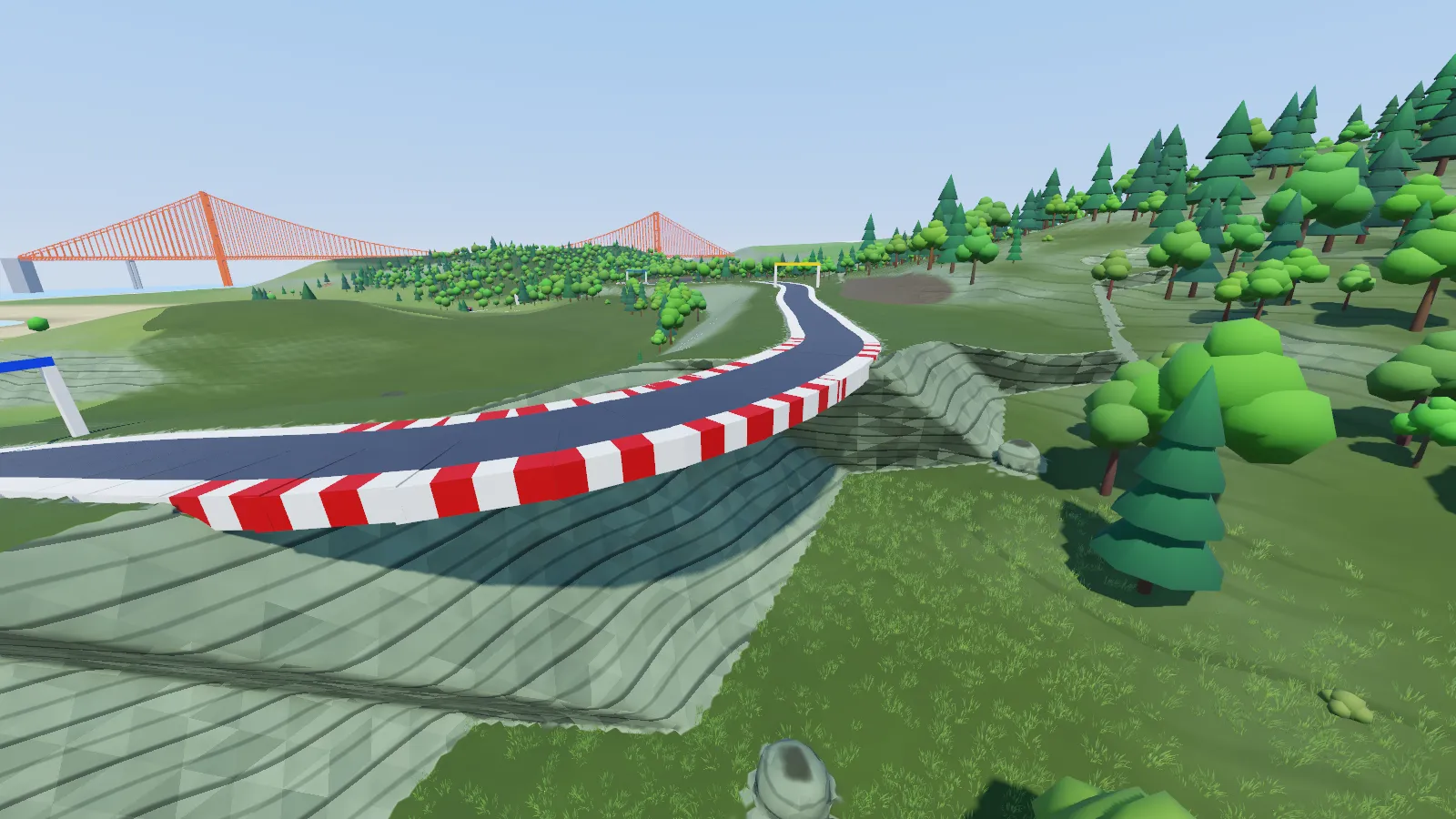
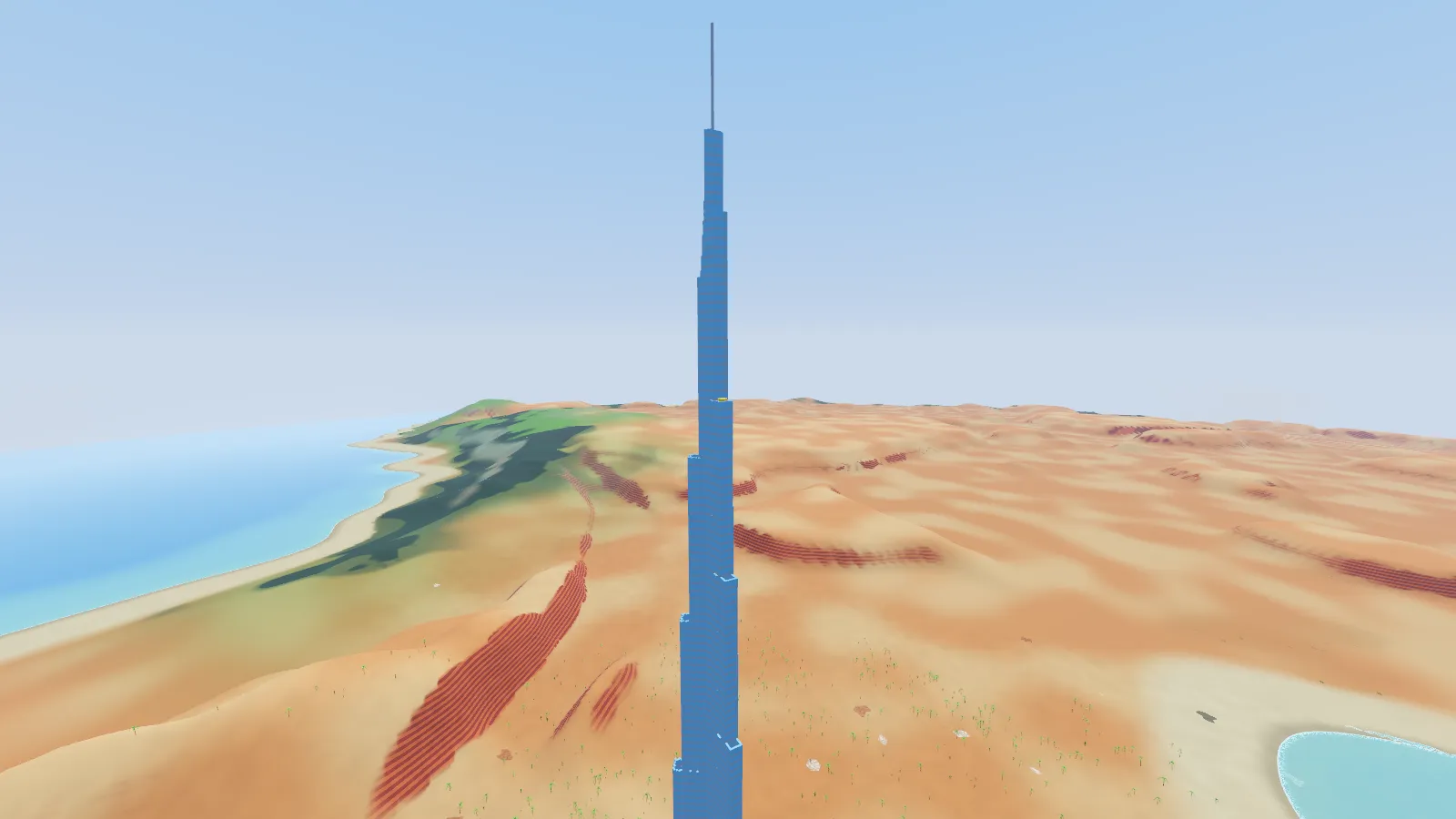
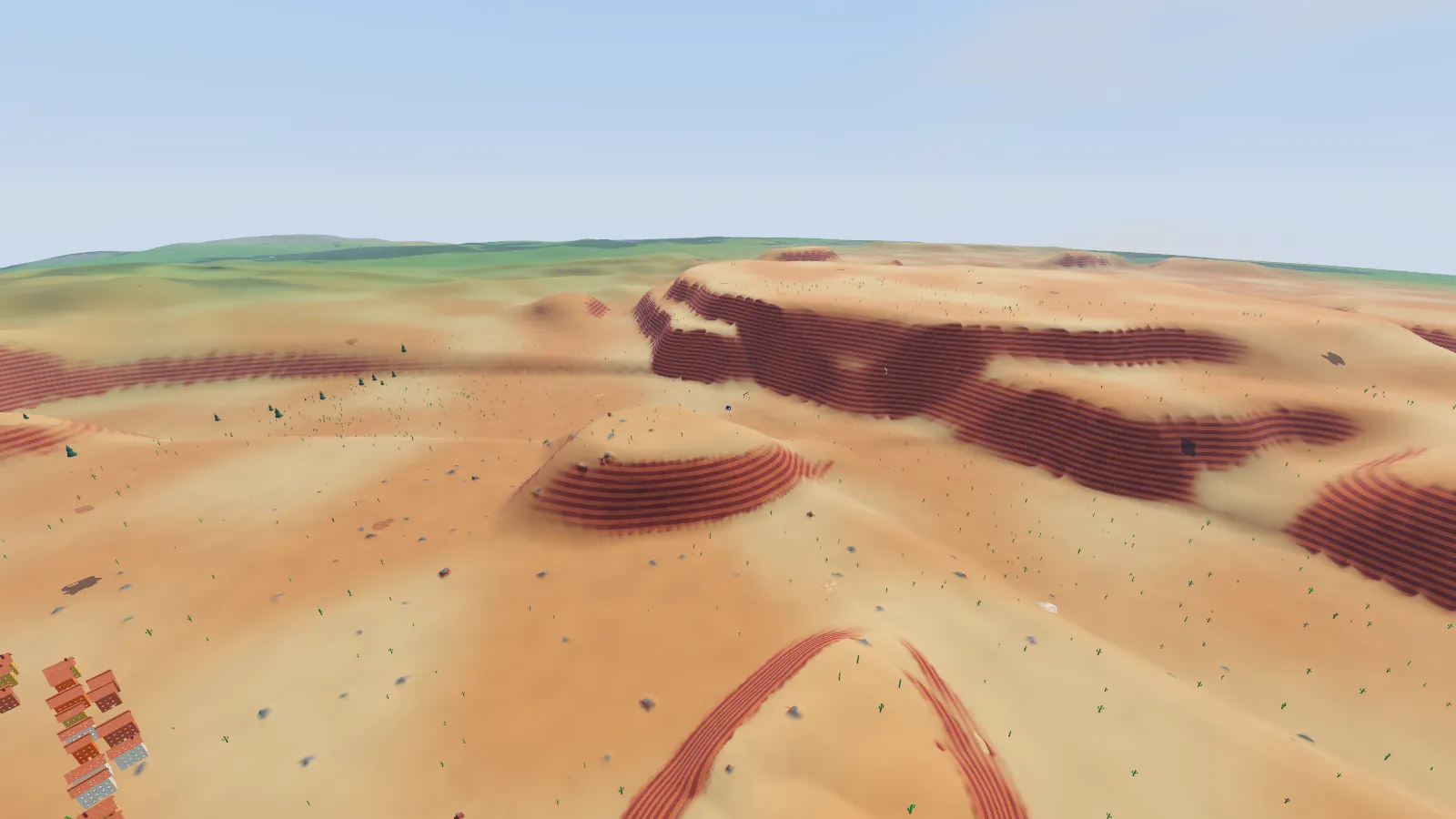
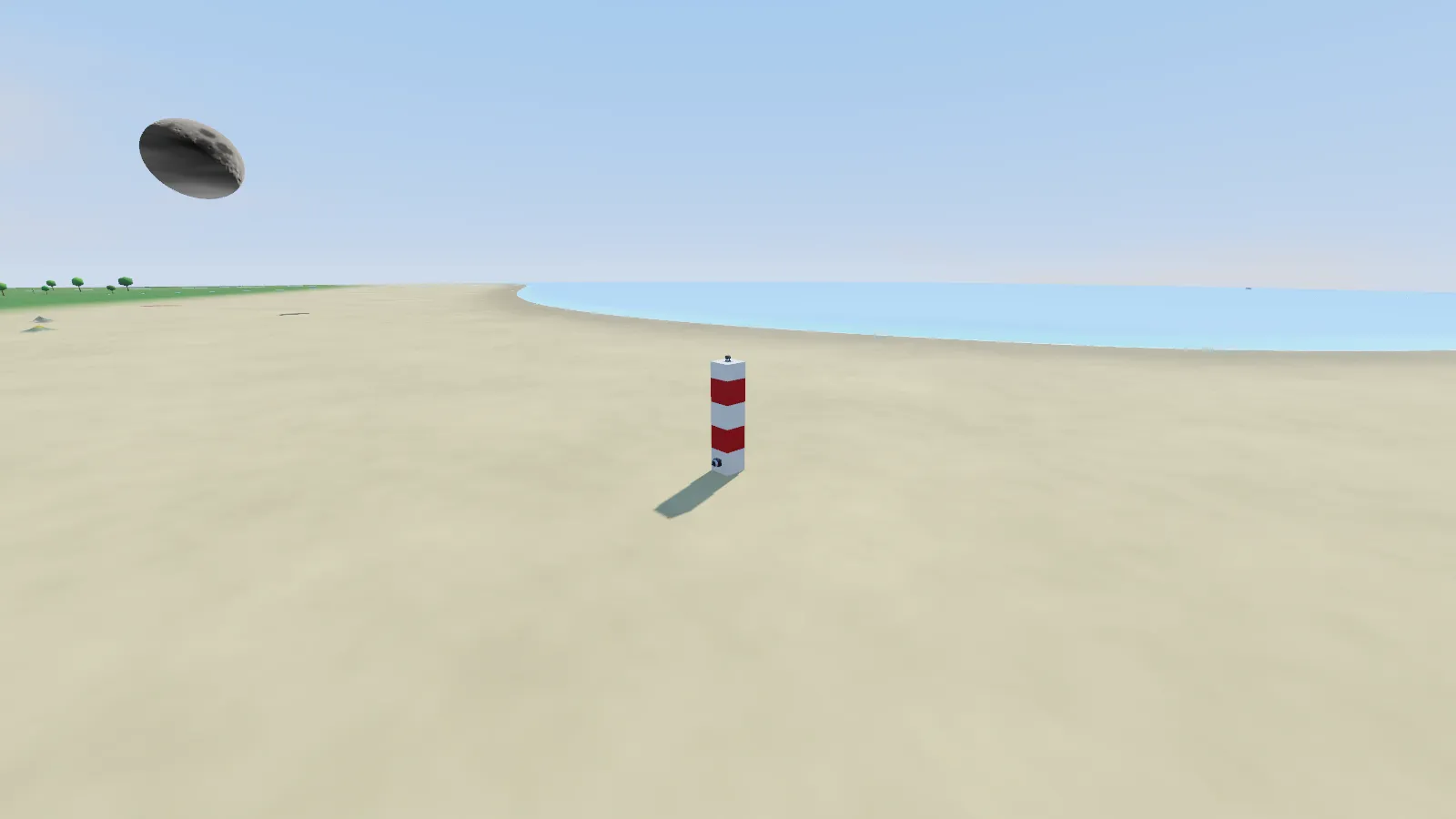
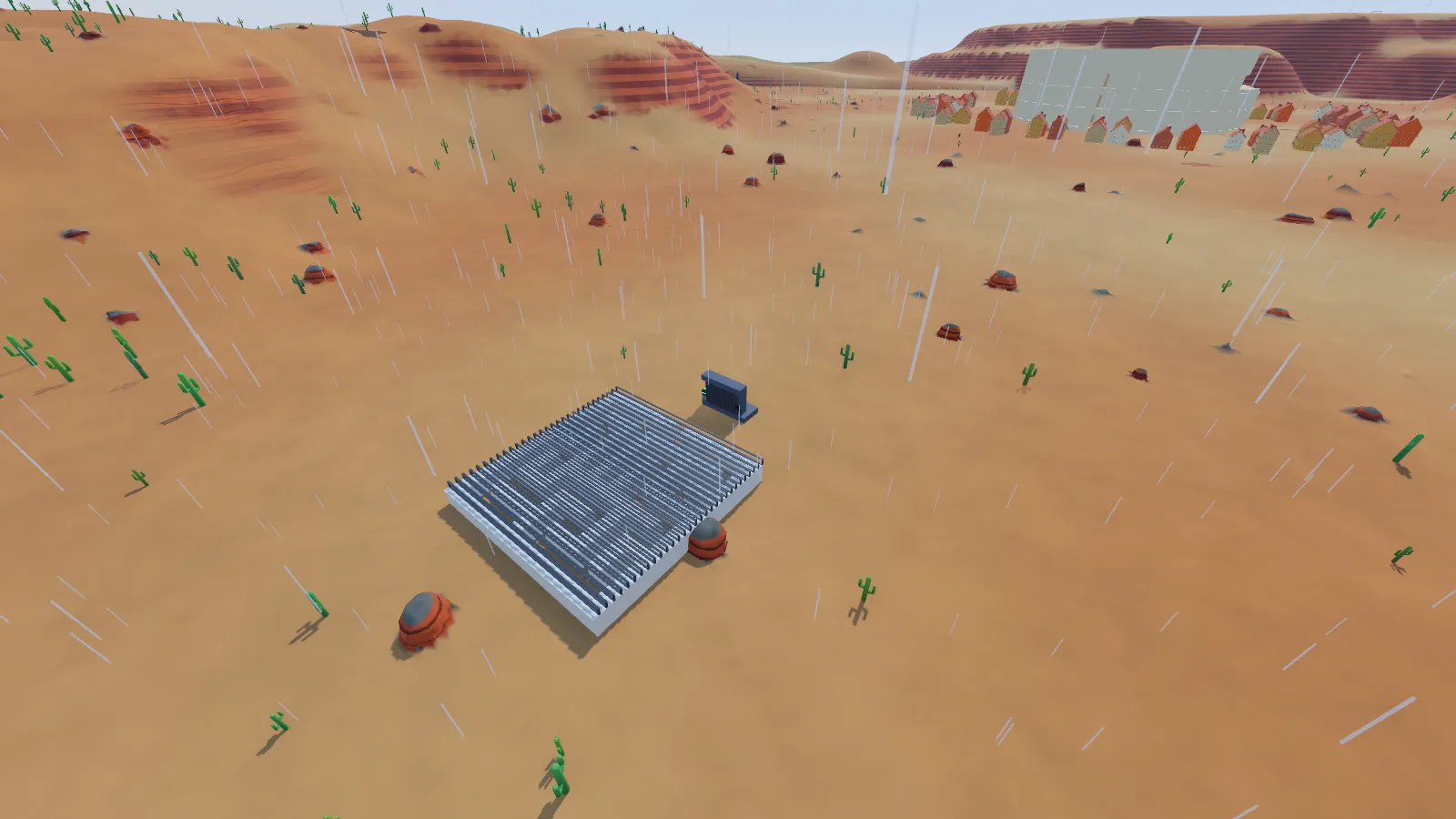
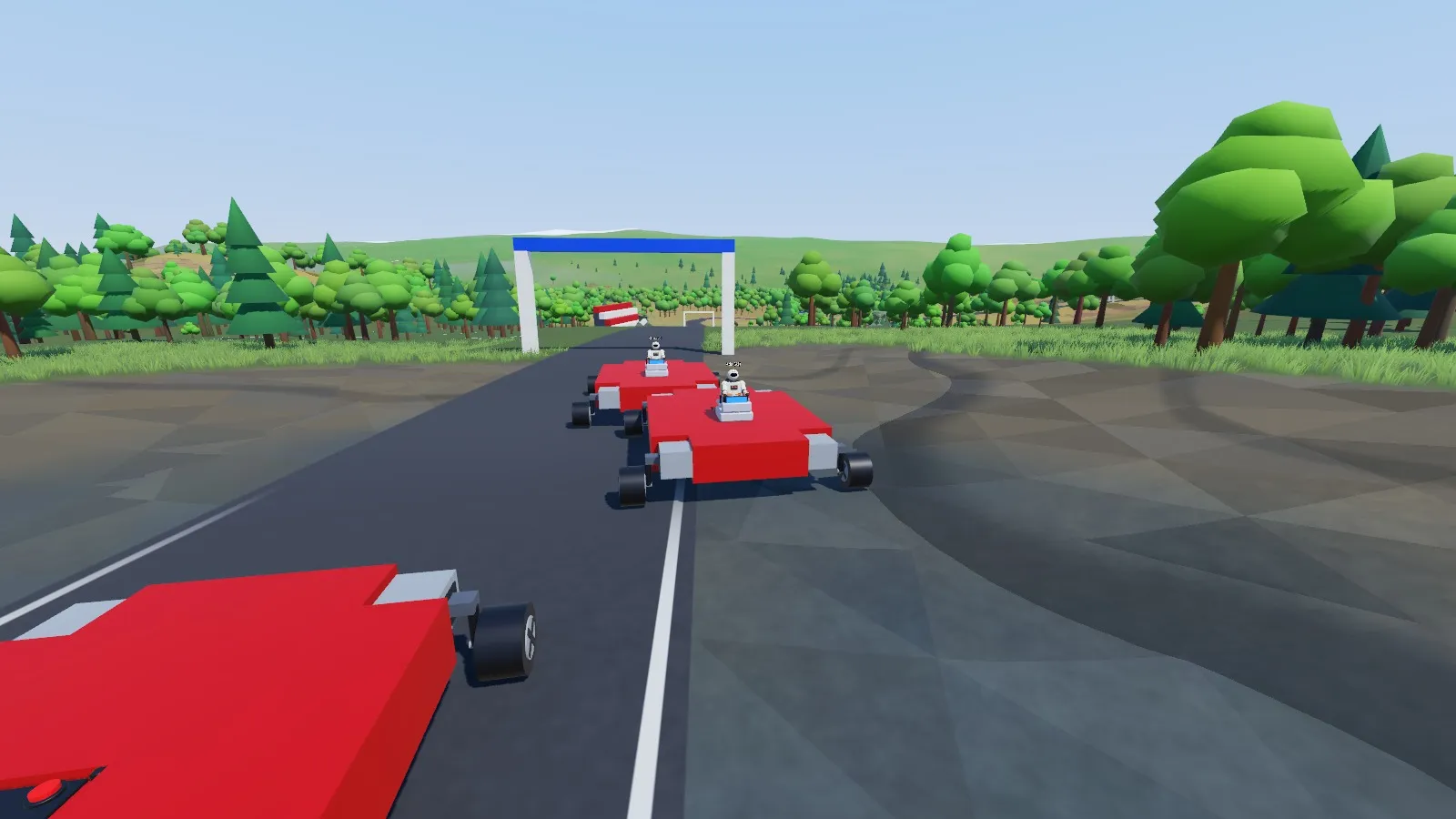
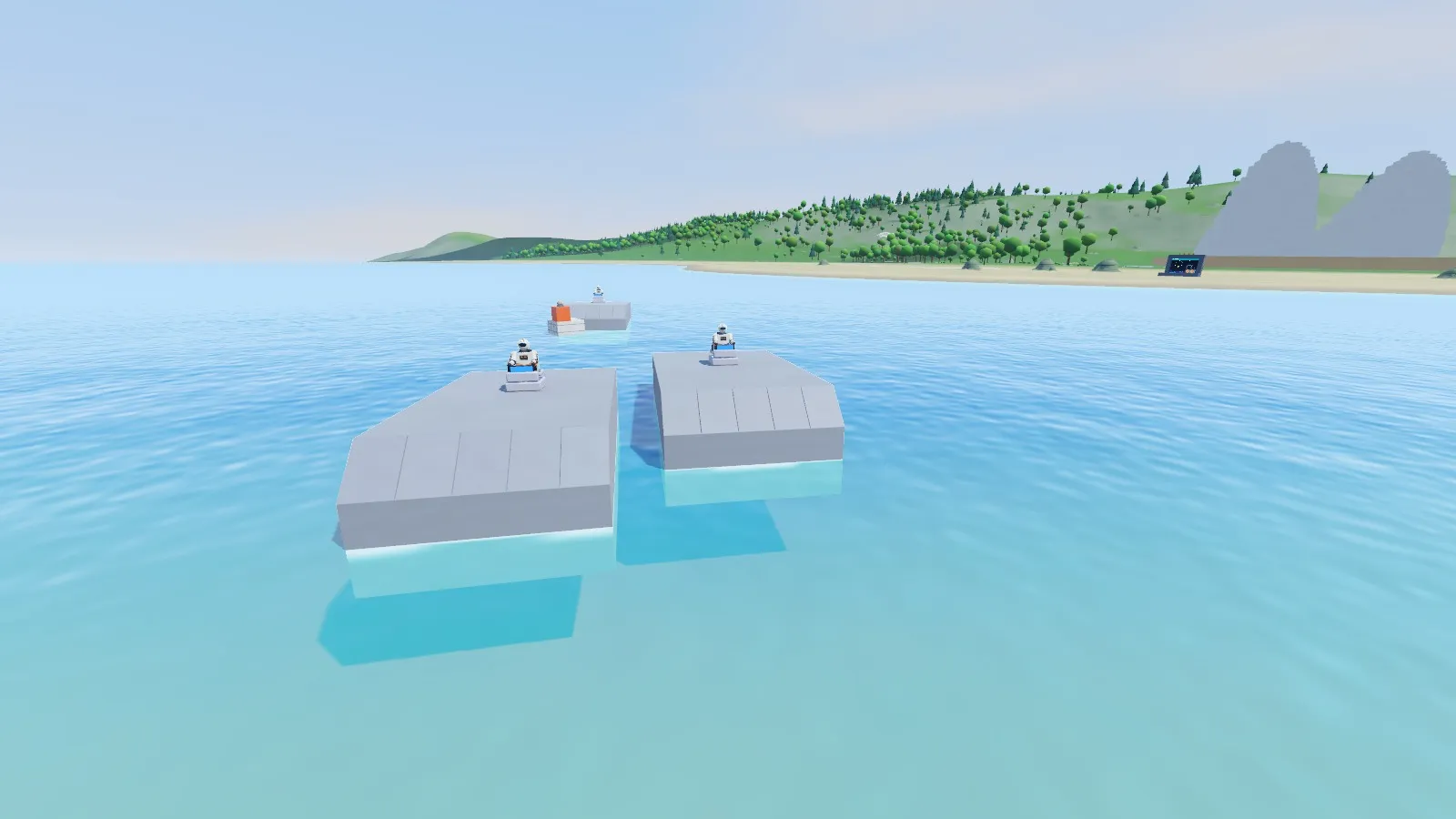
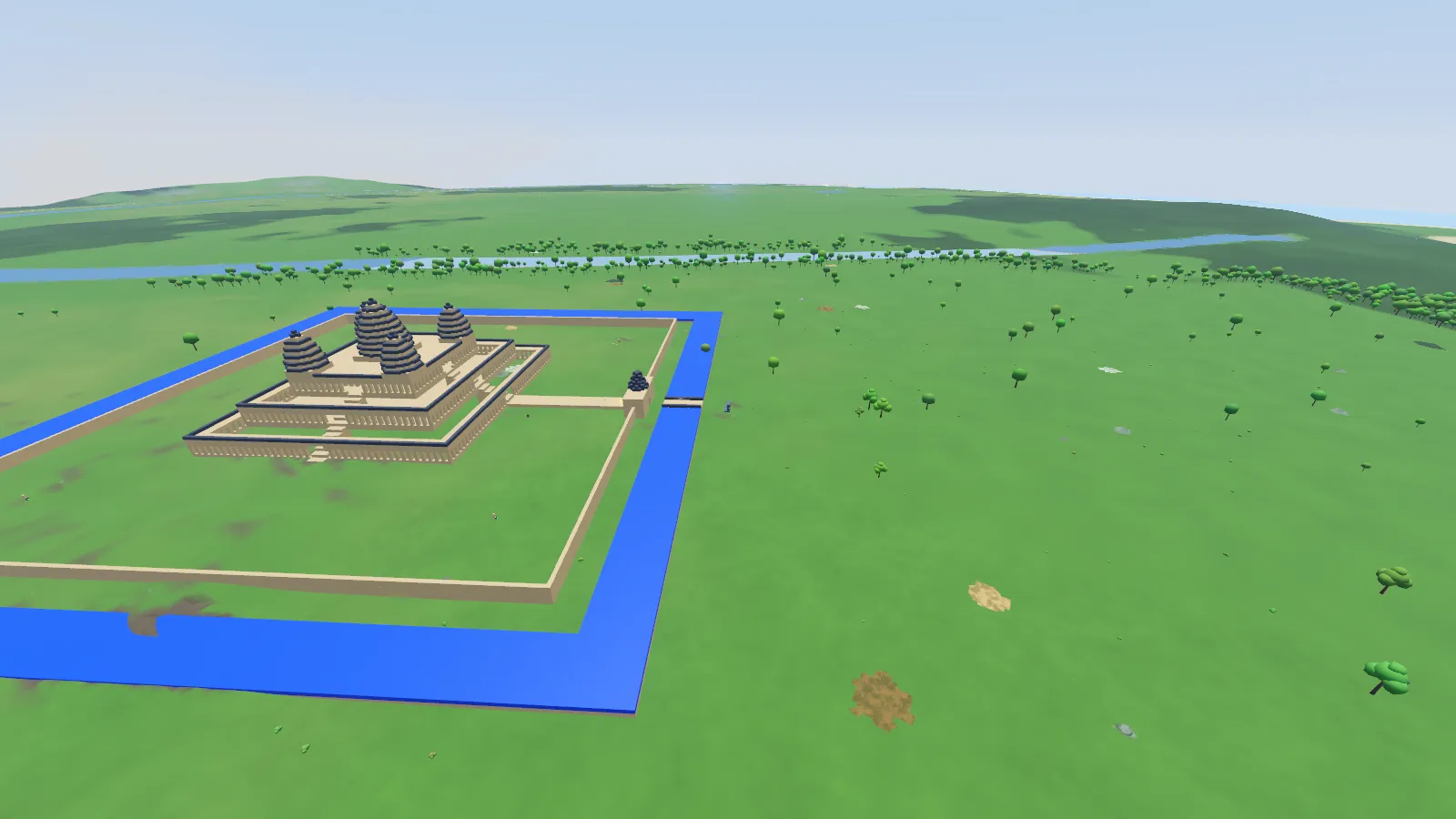
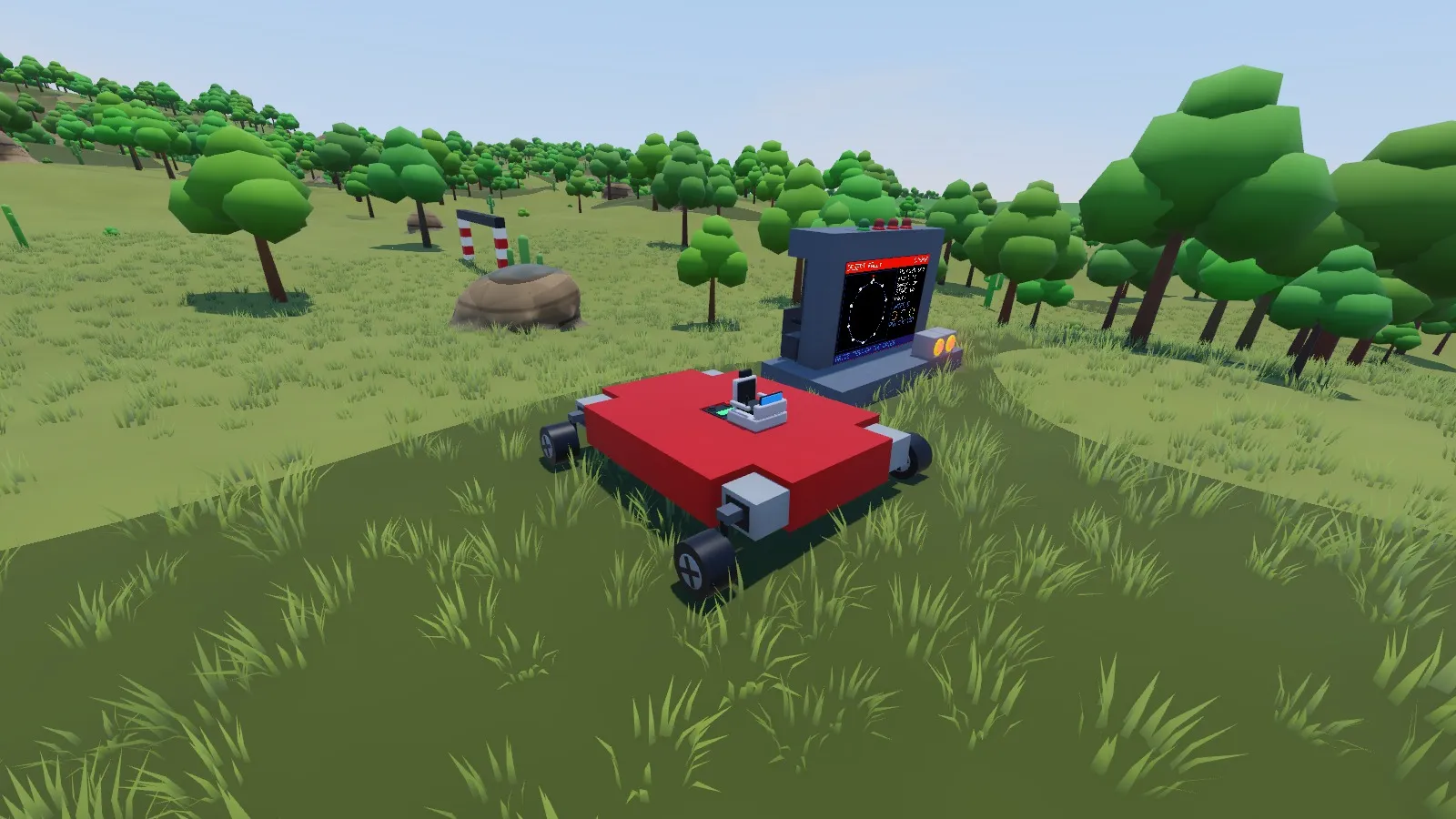
(the chess, the hill circuit, the screens), tests (each played to a win). Every new world but a Learn world or a scene plans the twenty-four after its towns (from the server's world seed), one at each landmark, its course laid round the landmark itself where it has one; with the landmarks off, or where its landmark has no room (the regatta and the lighthouse need a shore within 6 km), each goes by the town that suits it best (scored: the regatta and the lighthouse by the nearest coast, the rally and the hidden chamber in the desert, the deep shaft in the mountains; each town taking few), on a level, dry spot out of the town, the water ones at the shore (the last dry spot before open sea, the course out on it). Built when a player comes within 4 km, never taken down; no trees on their ground (their clearings join the towns'). Worlds saved before keep the twenty they had, where they had them.
| Landmark | Challenge | Why there |
|---|---|---|
| Eiffel Tower | Air race | pilots have flown under it |
| Christ the Redeemer | Ring run | rings spiral up its hill, past the open arms |
| Golden Gate | Hill circuit | Laguna Seca is down the coast |
| Djenne | Desert rally | the Dakar rally crossed Mali |
| Sydney Opera House | Regatta | the harbour |
| Great Wall | Beacon relay | the watchtowers' signal fires |
| Angkor Wat | Temple run | round the temple on foot, as pilgrims go |
| Pisa | Bullseye drop | Galileo's drop |
| Burj Khalifa | Spire landing | a pad on its ledge, 504 m up |
| Hallgrimskirkja | Moon pad | the Apollo crews trained on Iceland's lava |
| St Basil's | Grandmaster | Russian chess |
| Big Ben | The program | the clock that must be set right |
| Chichen Itza | Ground control | El Caracol, the Maya's observatory |
| New York | Contract | its harbour |
| Taj Mahal | Echo | the echo under the dome |
| Himeji Castle | Hold the square | a castle held |
| Colosseum | Labyrinth | the hypogeum under the arena |
| Great Zimbabwe | The deep shaft | its gold came out of shafts |
| Moai | Dark lighthouse (S) | an island |
| Machu Picchu | Fox hunt (S) | a signal in the mountains |
| Brandenburg Gate | Number station (S) | the Cold War's number stations |
| Stonehenge | Solstice (S) | its own stones, the slab in their middle |
| Giza | Hidden chamber (S) | in the great pyramid |
| Borobudur | The old map (S) | lost under the ash, found again |
- Courses round the landmarks: the air race in the Eiffel Tower's frame: three pylon gates (two banded pylons 16 m apart, standing 12 m over the gate), the gold ring under the tower between its legs (25 m up; its arches 56 m, the legs 48 m apart there), a gate out, four rings climbing round it to 140 m and diving back to the start. The ring run at the Redeemer: eight rings spiralling up round the hill (270 m out closing to 160, at least 20 m over the ground), the ninth 48 m before the statue at the height of its arms. The spire landing at the Burj: a pad of 8 m (hazard stripes, lamps at its corners) on the ledge where its first wing steps back from 24 to 14 m, 504 m up. The bullseye 32 m off the leaning tower, on the side it leans to. The beacon relay through the Great Wall's ten watchtowers at the height of the way along its top (reached within 12 m: along the top or along its foot), a fire on each roof (a lamp and a searchlight up into the sky) lit as it is reached; from the first to the last, not round. The temple run round Angkor Wat: from the causeway over the moat, in at the gate, the four corners of the court between the outer wall and the temple, out again; on foot only (seated it does not count), posts with lamps, the next lit. The solstice uses Stonehenge's own stones, the slab in their middle. Without the landmark the same courses are laid on open ground.
- The hill circuit: a closed Catmull-Rom curve through 24 points after Laguna Seca (Monterey): the front straight, a kink over a crest, the Andretti hairpin, the esses down to the lowest corner, the climb to the top of the hill, the Corkscrew plunging off it (16 % at the steepest), the Rainey curve sweeping down, the last hairpin. 1.93 km round, 30 m from the lowest corner to the top, the tightest corner 13 m round. Laid 0.4-3.6 km out of its town on dry ground no more than 45 m up and down along it; the height wanted is over the ground's own lie smoothed along the track (240 m). The ground is shaped to it (the same edit chunks the Terrain Blower fills): flat across the road and 3 m either side, banks no steeper than 1 in 2.5 down to the land, and three hills besides (one in the infield, a ridge behind the Corkscrew). The road is the terrain (since 2026-11-27; no blocks): the shaped ground, flat across it, is what the wheels run on, and it is painted as a road: asphalt 12 m wide with a white line along each edge, and red and white kerbs 1.5 m wide (each its own narrow line, its outer half in the verge) along both edges round the tight bends. The roads go to the clients with the clearings once the circuit is built; the terrain shader paints them. A gantry over each of the 8 checkpoints (the start's chequered with lamps), a corner board at the top of the Corkscrew, a grandstand by the straight, the terminal beside it. One lap seated: gold under 110 s, silver under 170.
- Reward crates: winning gives nothing at once; a gold crate
(
Reward: NAME, a loose grid) is left at the finish (at the goal of those with one, on the pad or the target, beside the finish line, by the terminal's desk for those in the air and at sea), and picking it up opens it: the paints and recipes of the levels won since become the world's, the blocks ready made (2 jets from the ring run and the air race, 4 large wheels from the rally and the circuit, 2 parachutes, 4 searchlights from the beacon relay, 2 batteries from the temple run) go into the inventory of who opened it (at their feet if it is full). A crate gone (blown up, carried off) is put out again; a better level won while it waits goes into the same crate. Kept in a section of its own at the end of a save (an older save: all it had won was given). - The terminal: a desk of buttons before a screen of 6 x 4 displays (192 x 128 pixels), its computer, battery, speaker and solar panel behind, an antenna on top for some. The screen is drawn as a picture: a header in the challenge's colour (its name, its place), a picture on the left (a course from above with the next gate blinking, the passed ones green, the racers red and orange, the circuit's profile of hills under it; the pad from the side with the craft coming down and a speed gauge banded by the medals; the target with the last drop; Big Ben's face over the radio's talk; the Earth with the station's cone and the passes; the contracts' bars; the echo's four pads lit; a radar of the drones round the square; the maze as its machine radioed it; the shaft's depth marks), on the right the clock, what is next, the three medals (lit as won) with what each takes, the best, "reward waits" while a crate is out; a hint along the foot. Drawn again only when it changes. No rumours of the secrets: each is at its landmark.
- The referee is a script on the terminal's computer (since
2026-11-27; asked: "make sure that everything ingame is run in a
programmable computer"). Each kind's script is (the screen, the medals, the
buttons, put before each kind's own:
course,drop,landing,chess,program,orbit,contract,echo,square,maze,solstice,lighthouse,numbers,map,reach), uploaded to its computer when it is built and again whenever the game's script differs (an older save's computer, or one with none, gets the current one). It runs as any computer's does (ten times a second,me:set_frequency(10); ground control and the old map stay awake), within a script's budget, and reads its buttons, lights its lamps, draws its screen and talks on its antenna through the blocks' own calls. Besides, a challenge's own computer (and only it) hasreferee:referee.info()(the course's points and the up at each, the radii, the times, the medals won, the best, the code and key, the time of day, the Earth's centre; all in its grid's frame),referee.players()(who is within 3 km, seated or not, bots marked),referee.things()(the loose grids within 2.5 km, and for ground control what has an antenna in orbit, with its lowest point),referee.depot(), and its powers:award(level, best)(the sim pays: the reward crate),tell(text, player, reach),found(),reveal(),lamp(n, on)(its lamps on other grids),take(key, n)(from its depot),spawn_drone(at, toward)/remove(id)(the square's drones),bay(true)(a loaner),racers(n). The chess engine is the game's, called from the script (any script's; its time is not counted against the script's 5 ms). The secrets with no terminal have the computer tucked into one of their grids: under the fox's transmitter, on the dark lighthouse's wreck (it watches the tower's power through its socket), in the hidden chamber, under the solstice slab, under the old map's vault. - Races (the seven courses): START on the desk lights the three red
start lights over the screen one by one, then the green: whoever is at
the start line then (within its radius and 40 m) races, with three
racers: bot players named "Ada (AI)" and so on, in
the course's vehicle (the rally car for the rally and the circuit, the
shuttle for the ring run and the air race, a motorboat for the
regatta; on foot for the temple run and the relay), lined up behind
the start in lanes. Each vehicle is driven by a computer of its own
("Racer Computer", the course in its
storage) holding the seat's controls (
Cockpit:set_controls) as a pilot would: braked at the line till the green, which the referee sends on the race's radio ("GO" from the terminal's "Race Radio" to each vehicle's "Racer Radio", channel 7000 + the challenge's number); then toward the next point in its lane, slower into a sharp bend, on the circuit along its road, backing off when stuck. On its back 2 s, or stuck 10, its computer radios "MARSHAL" ("Racer Radio"); the referee hears it and calls the marshal ( referee.rescue(from)), who sets it back on its wheels at the last point it passed. The racers' vehicles pass through each other (two lanes meeting at a gate at 25 m/s broke both cars apart); they meet players and the world. The referee judges them as it judges players: places called out ("Bruno (AI): 2nd, 104.2 s"), medals for players only. Over, the racers park 15 s and go. Passing the start on the move without START is still a time trial, as before. - Loaners: VEHICLE on the desk of the courses (not the temple run), the bullseye drop and the two pads asks for a vehicle, and the challenge's bay prints it: a shed open at both ends beside the terminal (at the regatta a pier over the water by its first buoy), its side walls and roof set with welders (as few as reach every block, some hung on posts just over the vehicle), a crane in the roof (a piston pointing down) with a merge block for a hook, a projector holding the vehicle's blueprint on the crane's head, a sensor, batteries and the "Bay Computer". Asked (the referee runs it with "BUILD"), the shed clear of ships, it switches the welders on; the vehicle is welded in block by block, hanging from the hook, its next blocks shown as ghosts; whole, the crane lowers it onto its wheels (the water), the hook lets go (its merge block off cuts it from the vehicle), and the crane draws up again. The rally car for the rally, the circuit and the relay; a jet ski for the regatta; the skiff for the ring run, the air race, the drop and the pads (the shuttle's parts on an open floor 3 wide, four lift thrusters under it, two each pushing down, forward, back and to the sides). The shuttle and the motorboat cannot be welded from outside (their middles are out of every welder's reach). A loaner is warded (a piece of a warded construction is); a challenge keeps two, the oldest nobody sits in towed away for a third.
- Warded: no damage (a blast passes it by, a weld wears nothing), and no player places, removes, paints, renames, drills, carries, reprograms or sets anything on it but its buttons (refused in the sim and at the server with "that belongs to a challenge"). Things can still be put into its containers (the depot). Saved with the challenges (after the towns in the save), warded again on a load.
- Rewards (by level, in the crate): the 14 challenge paints (chessboard, race stripes, desert camo, sailcloth,
aurora, phosphor green, circuit, gold leaf, starfield, lava, stained
glass, sun gold, tiger, hazard stripes; never at a wreck or cache) and
some existing ones (chameleon, marble, brass, chrome, gunmetal, galaxy,
holographic, pearl), and in survival the locked recipes
(
LOCKED; the fabricator refuses them, naming the challenge): jets (ring run, bronze), large wheels (rally, bronze; huge at silver), the parachute (bullseye), large and huge ship propellers (regatta), radar (the program), the huge thruster (spire), the gravity generator (ground control), the warhead (deep shaft), large and huge propellers (contracts 1 and 2) and the shield (hold the square). The ion drive and the bore rig stay free: the milestones and the playthrough bot need them. What is won is the world's; a sandbox locks nothing. - New paint styles: Checker (13: 50 cm squares of the paint and its second colour) and Stripes (14: bands of the second colour edged with the third).
- The compass shows every challenge found ("Ring run, Bremwick"); the six secrets (dark lighthouse, fox hunt, number station, solstice, hidden chamber, old map) only once a player comes within 60 m (or the lighthouse is lit, or the map's scraps are all found: then the wreck, the vault).
| Challenge | How it is played and judged | How it is solved | Levels |
|---|---|---|---|
| Ring run | 8 rings (9 m) on a loop 320 m round, 35-59 m up; seated, through each in order (the way between two looks counts) and back through the first | VEHICLE on the desk: the bay welds a skiff; fly it through the rings in order, low and steady, and back through the first | gold < 90 s, silver < 150 s, else bronze |
| Desert rally | 10 gates on the ground on a loop 330 m round | VEHICLE: the bay welds a rally car; drive the 10 gates in order | gold < 120 s, silver < 200 s |
| Regatta | 6 buoys at sea, 140 m round | VEHICLE: the pier's bay lets a jet ski down on the water; round the 6 buoys in order | gold < 100 s, silver < 160 s |
| Bullseye drop | a target of red and white rings (16 m); anything not a seat's grid that was 25 m up, coming to rest on it | a skiff from the bay (or any flyer); hover over the middle at 25 m or more and drop a block or a crate onto it (a grid without a seat) | gold within 3 m, silver 8, bronze 15 |
| Spire landing | a column of 60 large blocks (120 m), a 6 m pad; seated, the speed at the first look on the pad, then still 1.5 s | a skiff from the bay; climb beside the column, come over the pad slowly and set down under 1.5 m/s, then sit still | gold < 1.5 m/s, silver 3, bronze 5 |
| Moon pad | a pillar of 30 m, a 4 m pad | as the spire: a skiff, slow over the pad, down under 1 m/s | gold < 1, silver 2, bronze 3.5 |
| Grandmaster | chess (castling, en passant, promotion to a queen); the terminal plays black, looking 1 (and taking near-best moves), 2 or 3 moves ahead | Start, then play white by touching the squares on its screen (from, then to); beat its engine | easy, medium, hard |
| The program | Start; five tasks radioed on channel 7 (SUM, SORT, MAX, REVERSE, MUL), each answered on channel 7 within 15 s | an antenna of one's own on channel 7 and a computer whose reads the task and sends the answer (SUM, SORT, MAX, REVERSE, MUL); Start | won |
| Ground control | anything with an antenna in orbit (its lowest point 10 km up or more), coming into the 20-degree cone over the station 3 times | put anything with an antenna into orbit (lowest point 10 km up or more) whose path passes over the station; three passes | won |
| Contract | Start; within 15 minutes 20 steel plate, then 10 motors, then 10 circuit boards in the depot (taken) | Start, then mine, refine and craft what it asks and put it into the depot's cargo in time: 20 steel plate, then 10 motors, then 10 circuit boards | three contracts |
| Echo | four lamps light a sequence (3 long, one more each round, 4 rounds to 6); its buttons pressed back; a wrong one ends it | Start; watch the lamps, then press their buttons in the same order; four rounds | won |
| Hold the square | Start; three waves of 2, 3 and 4 guard drones from 220 m round; the one who started within 60 m of the square (20 s to get there) | Start, be on the square within 20 s, and shoot down every drone of the three waves (guns, turrets) without leaving the 60 m | won |
| Labyrinth | a maze of 7 x 7 rooms (4 m) under a glass roof, sunk in a pit to its floor; its 84 inner walls (2 x 2 m, 3 m high) each on a piston under the floor, driven by its machine's computer: every minute a new maze (never a wall up under anyone: its sensor), told to the terminal on the radio (channel 47); the middle reached on foot | walk the maze to the middle; its terminal shows each new maze as it is radioed (or listen on channel 47), and no wall rises under one | won |
| The deep shaft | a head frame; a chamber 45 m down to dig to | dig down by the head frame (drill or the tool) to the chamber 45 m under it and step in | won |
| Dark lighthouse (S) | power through its socket (a connector: dock a battery to it); lit, it shows a wreck 500 m out; reaching it | bring power: a cart or ship with a battery and a connector, docked to its socket; lit, the wreck shows on the compass: go to it | won |
| Fox hunt (S) | a transmitter on channel 9, 0.9-1.6 km out in the hills; reaching it | tune a radio (an antenna on channel 9, the radio map) and follow the transmitter out to it | won |
| Number station (S) | at night its antenna is named "NUMBERS a b c d"; the four numbers less a key's (on a wall in the nearest other town, "KEY...") entered on its keypad | at night read its antenna's name (NUMBERS a b c d); find the KEY sign in the nearest other town; enter each number less its key digit (mod 10) on the keypad | won |
| Solstice (S) | a ring of stones, a slab, the heel stone toward the sunrise; standing on the slab as the sun rises (just over the horizon, climbing) | stand on the slab at sunrise (wait the night there, or come back before dawn) | won |
| Hidden chamber (S) | a chamber in the great pyramid (or under the sand); reaching it | find the way into the pyramid (or dig under the sand) to the chamber | won |
| The old map (S) | five scraps (old chests) in the five nearest towns; with all five the vault far out shows; reaching it | find the old chest in each of the five nearest towns; with all five scraps the vault shows on the compass: go there | won |
| Air race | 3 pylon gates, the gold ring under the Eiffel Tower, a gate out, 4 rings round it up to 140 m; seated, back through the start | a skiff from the bay; the gates in order, the gold ring under the tower, out and round the rings, back through the start | gold < 85 s, silver < 140 s, else bronze |
| Hill circuit | one lap of 1.93 km over shaped hills, 8 checkpoints; seated | a rally car from the bay; one lap on the road through its 8 checkpoints | gold < 110 s, silver < 170 s |
| Beacon relay | the Great Wall's 10 watchtowers in order, the first to the last (within 12 m of the way along its top); any way | along the top of the Great Wall, tower to tower in order (on foot, jetpack or the rally car from the bay) | gold < 300 s, silver < 450 s |
| Temple run | 7 posts round Angkor Wat and out, within 5 m; on foot | on foot (seated counts nothing): the 7 posts round the temple in order | gold < 190 s, silver < 260 s |
/place challenge NAME [day] (sandbox) goes to one (built, found).
--autotest --host --challengeshots --shots DIR [--only NAME]
photographs each.
#The ISS Currentsince 2026-11-26
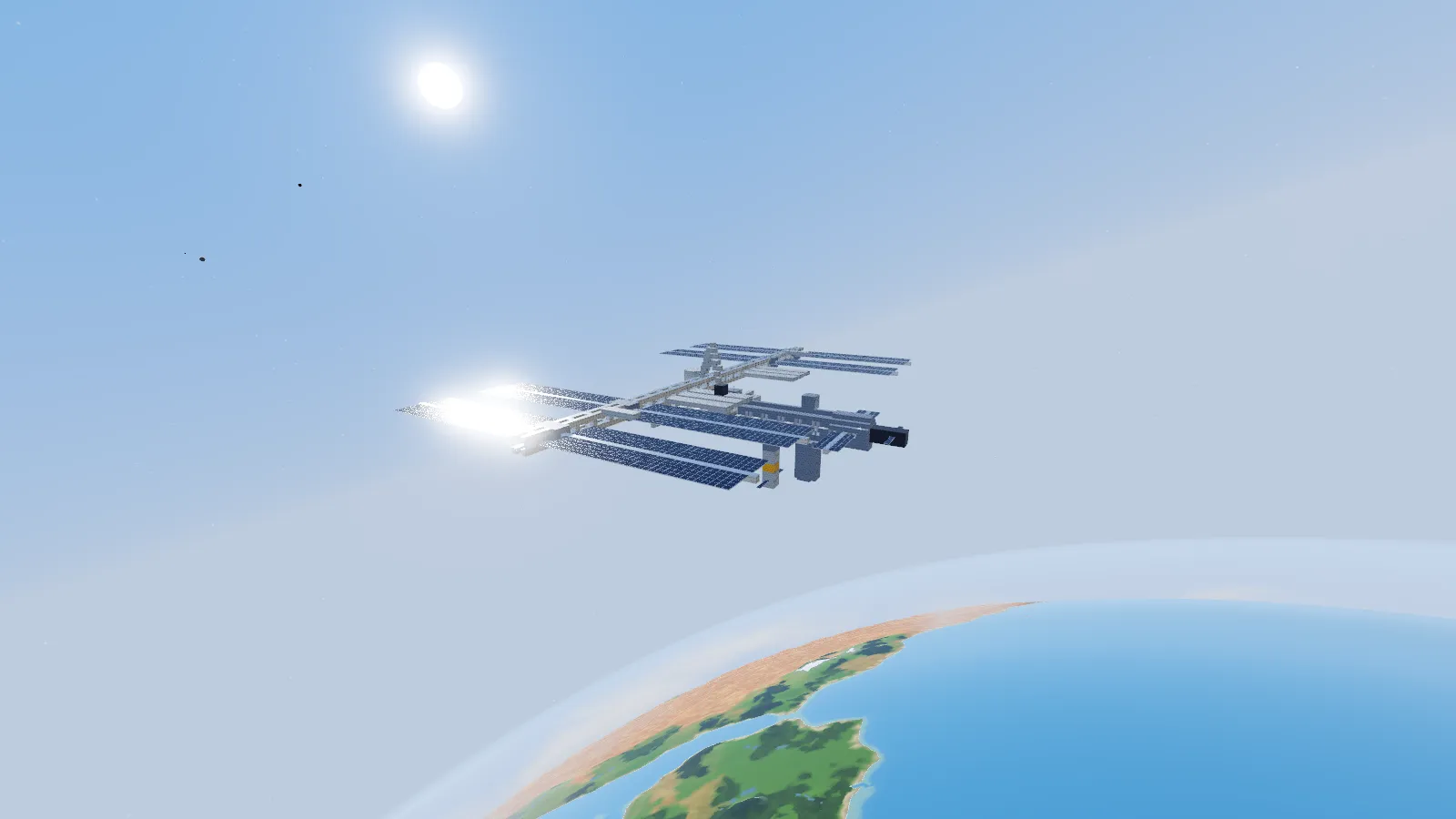
. Every new world with the landmarks (not a Learn world, not a scene) has the International Space Station going round the Earth (called by the server after the settlements are planned). Asked for 2026-11-26: "please create an iss and have it orbit earth".
- Full size, as the landmarks: some 109 m along its truss, 1 m blocks (light armour, solar panels, windows, lamps; some 6,250 blocks): the truss with eight solar wings (two pairs at each end, 33 m out ahead and behind), the radiators on S1/P1 and P4/S4; along the way it flies Harmony (Columbus right, Kibo left with its logistics module and porch), Destiny under the truss, Unity (Tranquility left with the Cupola's windows under it, Quest right), Zarya, Zvezda with its two wings, Poisk and Nauka; Rassvet with a Soyuz under Zarya, a Progress at Zvezda's back; Canadarm2 on the truss. White US, European and Japanese modules, grey Russian ones.
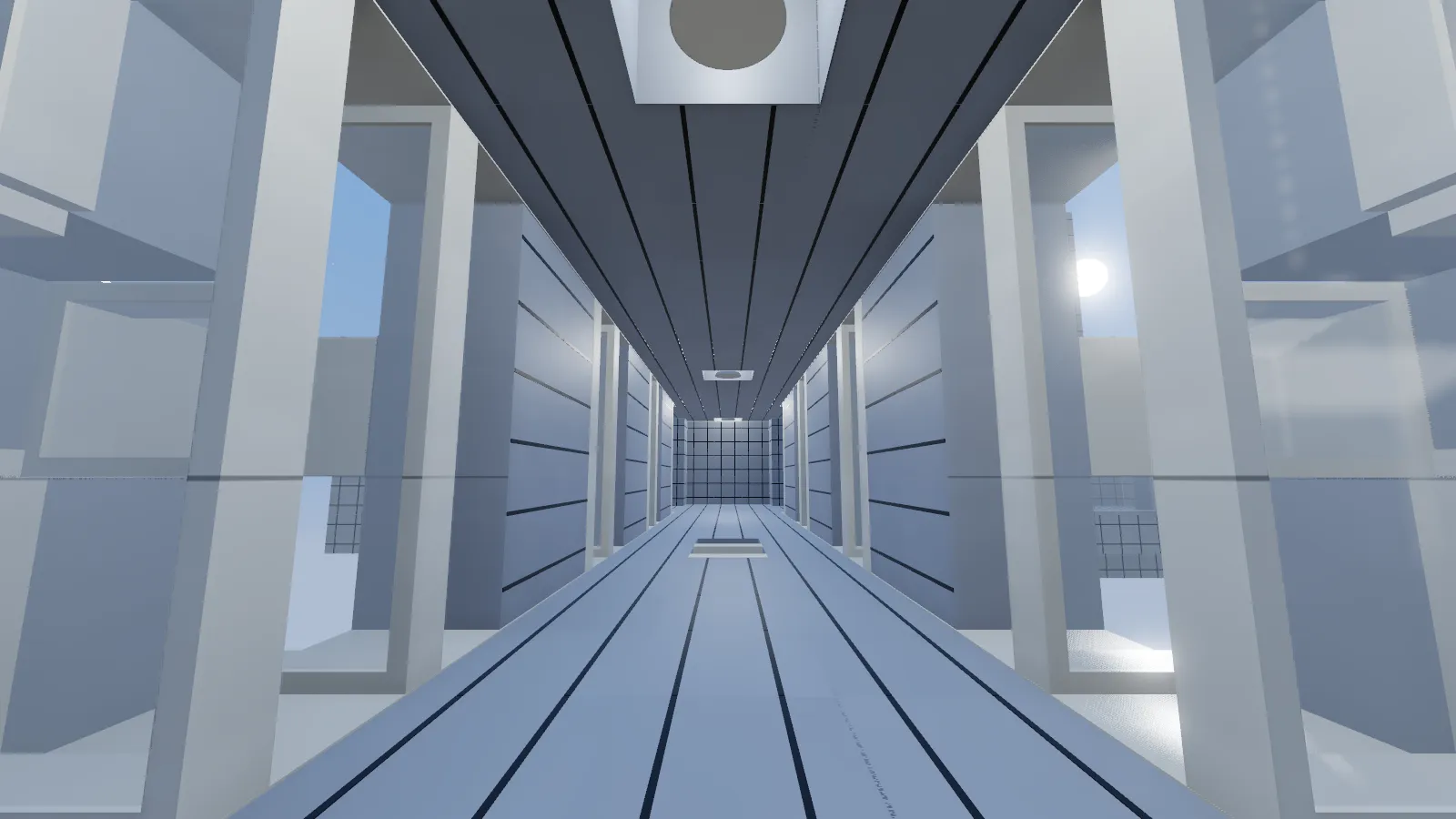
- Open inside (asked the same day: "have the iss be open so you spawn inside of it", "give it windows to look outside"): the modules are 5 m across (a little more than the real 4.2, to move in) and hollow, one way through 3 m by 3 from Harmony at the front to Zvezda at the back, and side ways into Columbus, Kibo, Tranquility (down from its end into the Cupola) and Quest. Windows down both sides of the main modules (in pairs every 4 m, the wall's full height), in the sides of Columbus and Kibo, two in Destiny's floor looking down, and the Cupola's: a ring of them round it and three under it, at the Earth. Lamps in the ceilings every 8 m at 0.4 of their brightness; the walls inside light grey (all white, by the lamps, it was glare and the windows were lost in it). Batteries under Zarya's deck. No air (no vents): a suit's.
/iss(sandbox): one is put inside Unity, the middle node, going round with it, and floats there: in free fall with it, one moves in its frame (see "Moving with one's ship": frames now hold over the air too).- Its orbit: 10 km up (over the air, which thins to nothing at 6.4 km: no drag; the real 408 km would be 4 km at the 1/100 scale, inside the air), round, tilted 51.6 degrees to the equator as the real one, going east, its path through the landing point; it starts 40 degrees short of it, so it passes over the start a minute or so in, then once round every 10.5 minutes (four times a game day; the Earth does not turn, so always over the same ground). No engines: only the Earth's pull keeps it going (a test checks it holds its height within 300 m over an orbit). It keeps its attitude in space rather than turning to face the Earth.
- Seen from the ground while within the grids' interest radius (20 km): passing over the start it is in view for some 40 s, 0.6 degrees across, about the Moon's size.
- On the radio: a powered antenna named ISS (batteries in Zarya, its panels charge them), heard by antennas in range.
- It is a grid like any other: it can be reached, boarded, shot.
- Tests: (its orbit over one round;
/isskeeps one inside for 10 s).--autotest --host --issshots --shots DIR: inside (fore, aft, to the Cupola, again 10 s on), the station from six sides as it goes round (a camera kept on a moving block), and the radio map with the radio on and off.
#Boulders Currentsince 2026-11-19
Boulders lie on the land where it is rocky: thick in the mountains (some 130 on a 500 m square), the desert and the hills, few on the ice, now and then on the plains; gathered in fields, never in water, on slopes steeper than 0.9, or within 300 m of the landing point or the flat north pole. Each is a lumpy ellipsoid 1.2 to 3.8 m in radius, sunk a little into the ground and turned its own way, bare rock (nothing grows out of one). They are part of the ground itself (joined into the base field on the fine levels of detail): drawn, collided with and dug like it, the same on the server and every client.
About one in twenty carries an ore otherwise found only deep down
(lithium, silver, cobalt, gold, neodym) in veins through it, which show in
the ore's own colour, crust and crystals as a deposit does in a pit wall.
The borer digs that ore out of them: a lucky find on the surface, before one
can reach the depths. /find boulder [ore] goes to the nearest one.
Since then no stones lie on the surface over a buried deposit (the scanner finds those); chunks of ore still lie in the holes dug into one, and tar still seeps up over the oil fields.
#Landscape: trees and the lie of the land Currentsince 2026-11-20
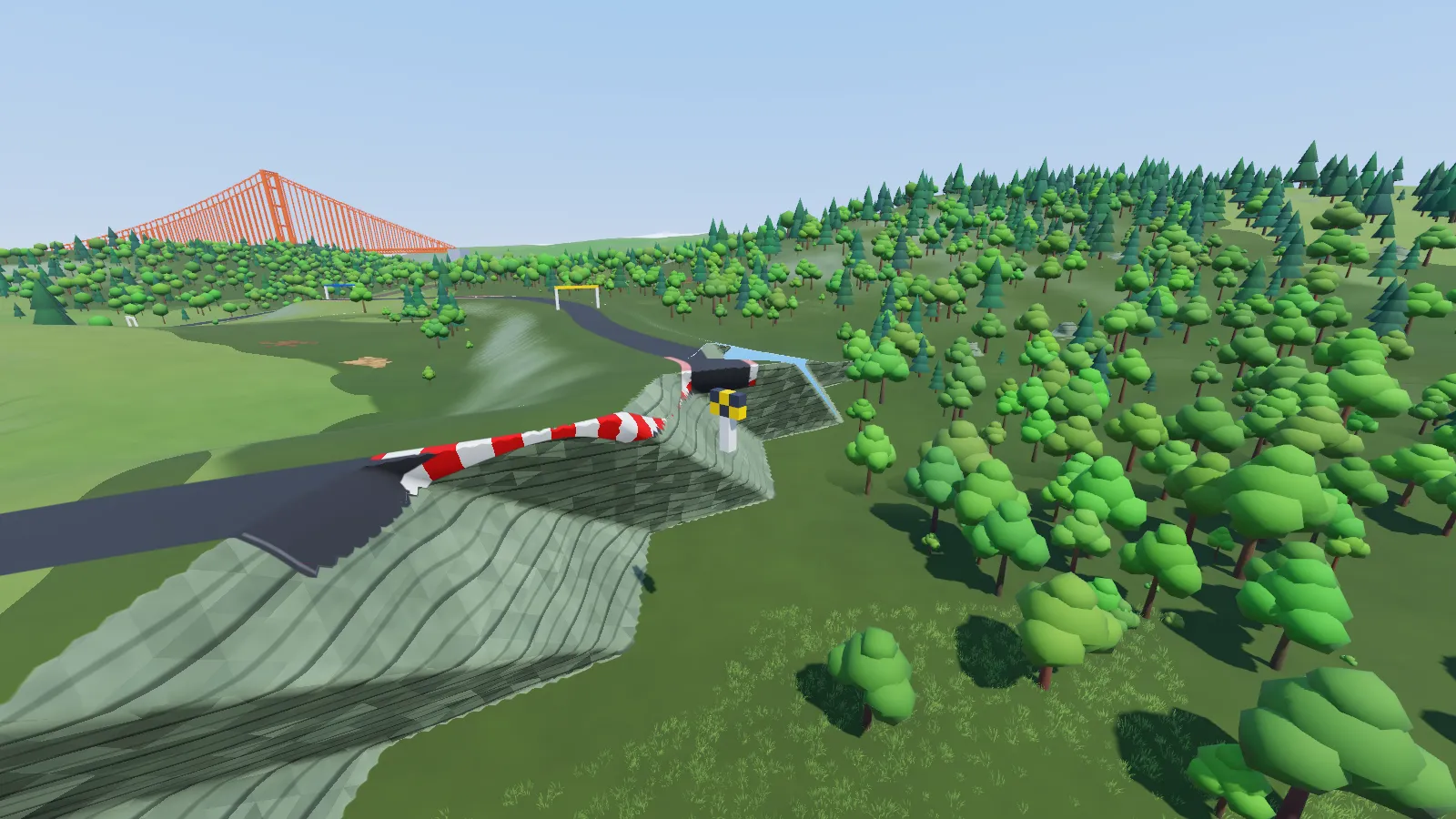
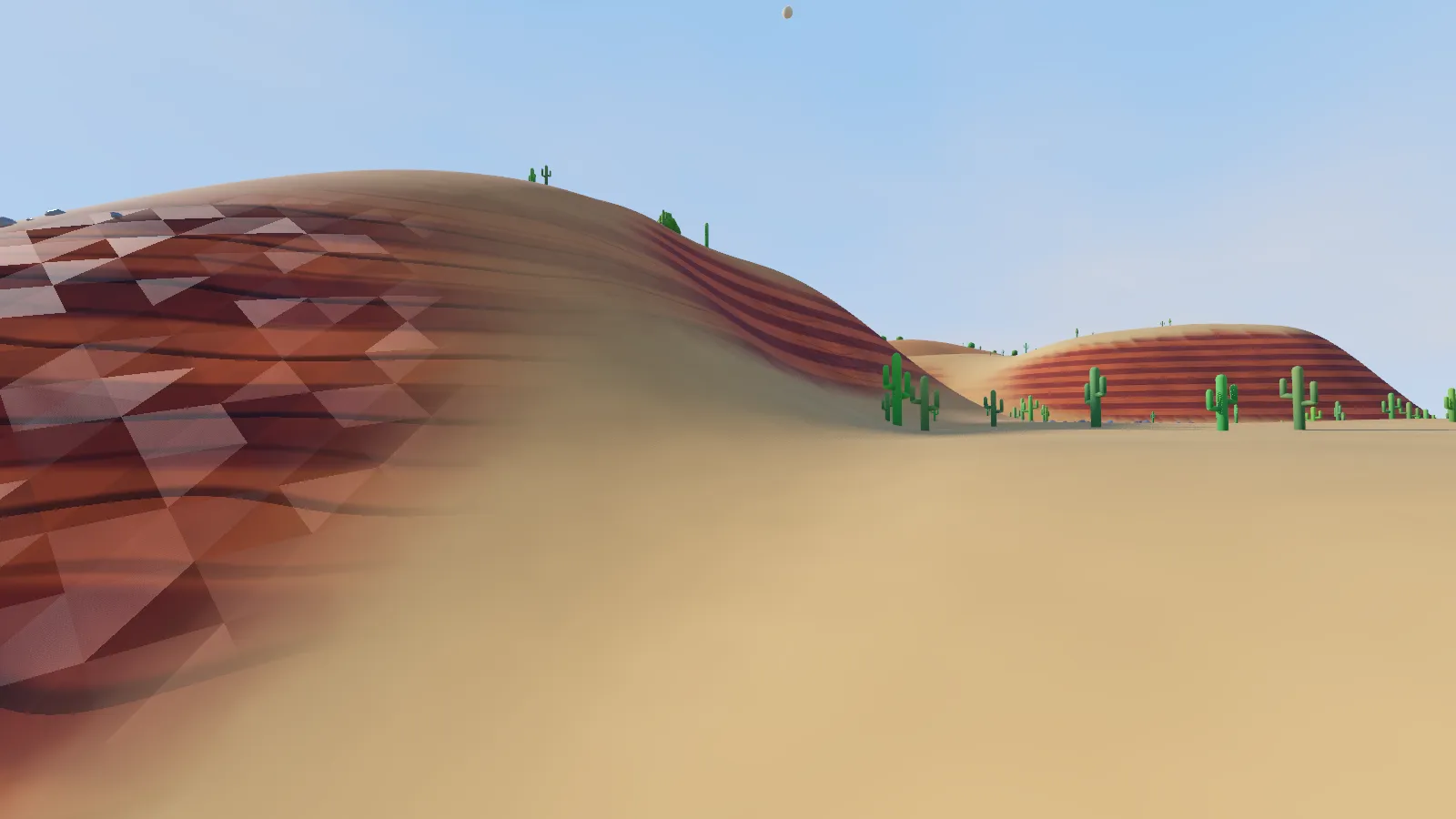
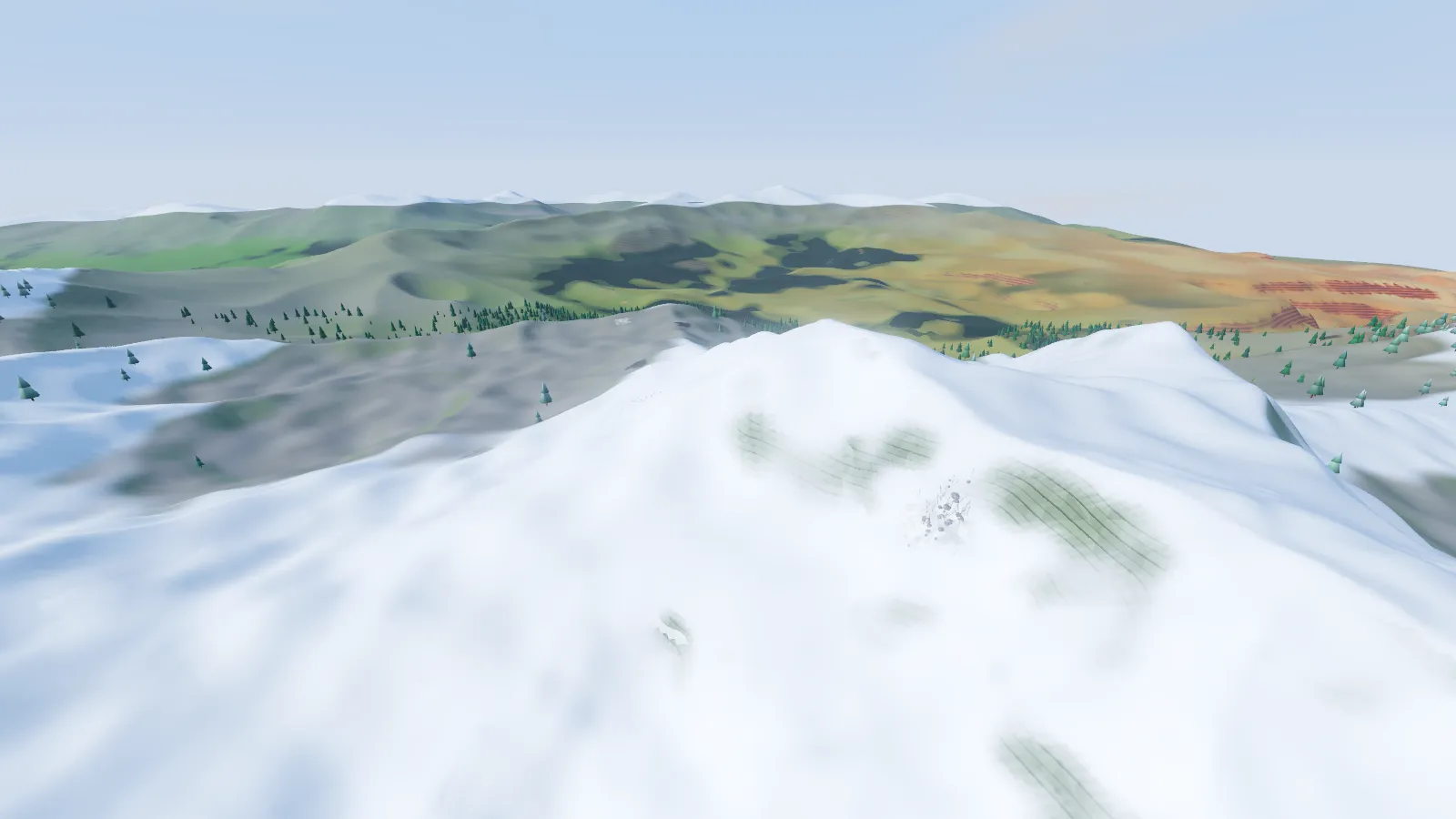
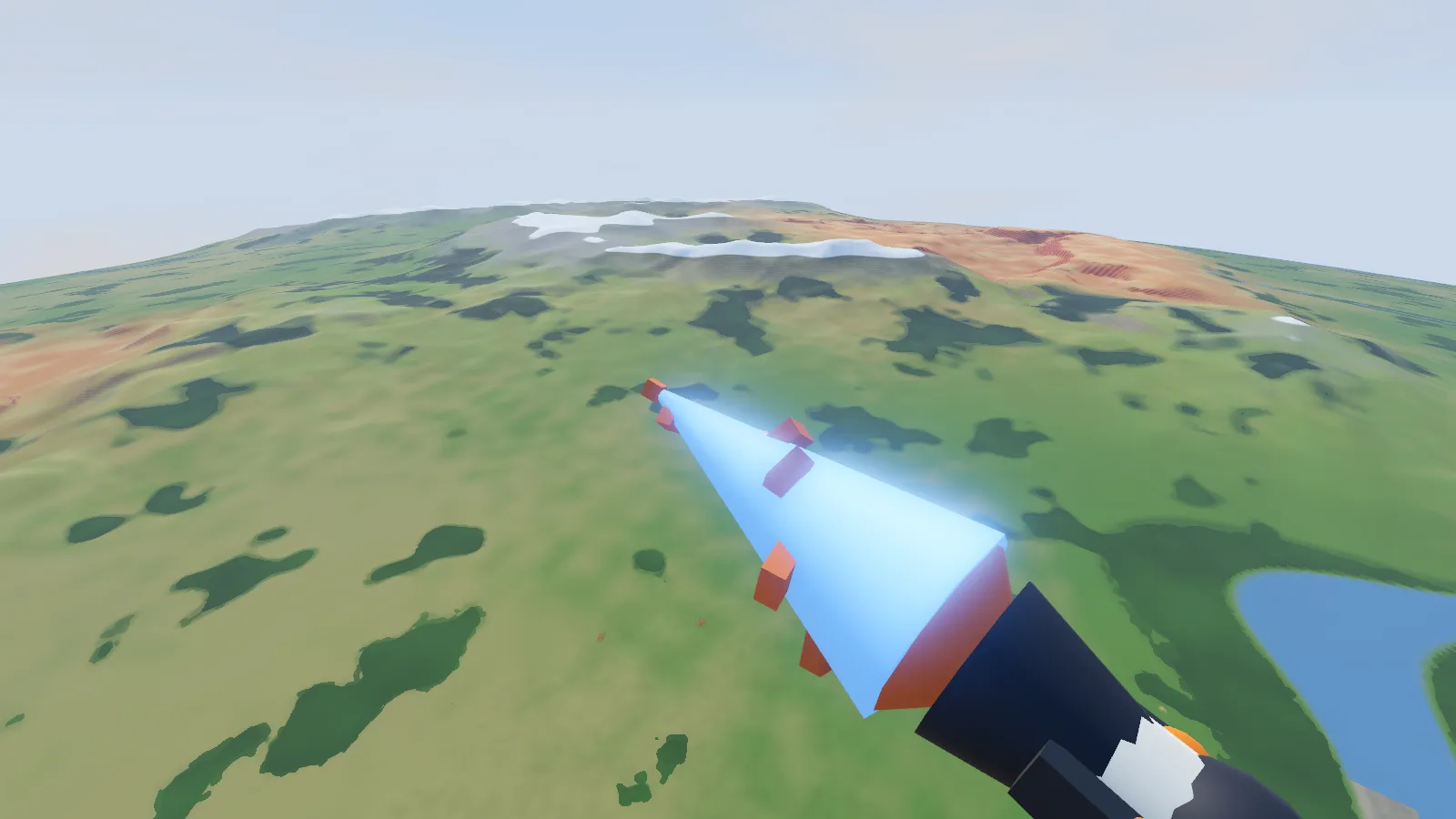
- Forests and plains: the green country is open grassland with a few lone trees (one in ~170 cells of 7 m) and forests between, patches a kilometre or so across with ragged edges (one tree in ~3 cells), more of the hills forest than of the plains; bushes mostly along the forests' edges; more trees along rivers. About half the trees of before (within 1.5 km: plains 3,800-9,500 leaf trees, was 11,500-14,200; hills 14,400-23,900, was 35,500-39,300; bushes a fifth). Mountains and the ice the same way, with fewer.
- Sizes: one tree in five is young (a third to two thirds grown), one in twenty an old giant (1.35x); lone trees in the open grow a fifth bigger: leaf trees 2.5-24 m (were 7-15 m).
- The ground of the plains has small shapes on its long swells: dips,
rises and banks of a few metres (110, 42 and 16 m waves) and, in some
stretches, clusters of low hillocks up to 5 m; about half again as
uneven as before (0.25 m rise over 10 m, was 0.17), not hilly. The
landing plains stay level. (
/visit <country> [km] [day], a test command, puts one on such ground;--autotest --scenerytakes pictures.)
#Weather Current
On the bodies with air, spells of weather come and go: on the Earth rain and
dust storms, on Mars dust storms; a few minutes each (coming and going over
half a minute), with 5-10 minutes of clear sky between (/weather <rain|dust|clear> brings one on where you are).
- Rain gives back to the lakes what they were drawn down (2 m³ a second a lake) and washes the dust off the solar panels; it falls round you, but not where a block is over the spot (since 2026-11-27): no drops under a roof, a wing or a bridge, none indoors; through a window one sees it fall outside.
- Dust storms dim the sun on the panels to 15% and settle dust on them (a covered panel gives 30% of what it would): what is left after the storm stays until rain, or slowly the wind, takes it off. The air turns to a brown haze.
#The real Earth Currentsince 2026-11-25
The Earth is the real one: its continents and seas, mountains, deserts and ice caps where they are, the game's own noise making everything finer than some 28 km on it (280 m here). Chosen 2026-11-25 over a made-up Earth with more relief ("make the world, world like... couldn't we just replicate the actual Earth?").
- Scale: 1/100 across (as every body), 1/25 in height (chosen so mountains stay mountains you can climb): Everest some 350 m, the Alps 190 m, Tibet a 180 m plateau, the deep ocean 150 m. Slopes at large scale are 4 times the real ones.
- Data: NOAA ETOPO 2022 (elevation with the seabed and the ice's surface)
and Beck et al. (2023) Koppen-Geiger 1991-2020 (climate), baked every 15
arc-minutes by
tools/earth_bake(1.7 MB, zlib'd grids): the height, the distance from the open sea's shore (oceans and the seas joined to them; the Caspian and basins under sea level are dry land), the climate class. Smooth (Catmull-Rom) between cells; the shore frayed by noise into bays and headlands. - What comes of it: land 29 % of the globe (was 60 %); of the land 31 % plains, 25 % hills, 19 % desert, 14 % mountains, 10 % ice. Desert where the climate is desert (steppe counts half), ice cap where it is ice cap (tundra is plain), mountains where the ground round a place rises and falls by a kilometre and more on the real Earth or stands over some 1,500-2,500 m. Hills and the plain's swells stay the game's own. The game's ridges stand on the real ranges at 0.4 of their old height. Rivers run to within 700 m of the sea (was 1.5 km) and not where the country is mostly mountain; lakes lie 450 m and more from it (was 2.5 km), their floors above the sea's level; inland the coast blends into the land's shape over 400 m (was 1.4 km). The snow line is the real one's: some 5,000 m up to 28 degrees from the equator, 3,000 m at the Alps', 900 m at 60, sea level from 72 (at 1/25).
- Small islands under a cell's size are lost, but for those the game needs: Easter Island, for its Moai.
- The landing point is in Umbria by Perugia (43.12 N, 12.45 E), 136 km north of Rome (1.4 km here), some 1 km from either sea; only 160-250 km (1.6-2.5 km) round it is kept green lowland (was 1.5-4.5 km). The globe is turned so that it faces the sun at noon on the first day, as the old landing point did; north is +Y. The north pole is out on the Arctic Ocean: no second landing plain there.
- The landmarks stand where they do: the Colosseum in Rome, the Eiffel Tower in Paris (10 km from the landing), Giza, Moscow, Dubai, Sydney, Rio..., each on the nearest ground that will do within 2.4 km of its real place (by the water a little inland). They keep only clear of the landing plain (850 m) and of one another (60 m), not 4 km and 3 km apart as on the made-up Earth. The towns with made-up names are still dealt out at random.
- The survival start is near the landing point (within 6 km: Florence to Naples), not anywhere on the globe; the Moon, which stands under the horizon from Italy, is no longer asked for in the capsule's windows. OPEN: central Italy at this scale is mostly mountain or too steep for the capsule (level within 0.6 m), so the starts found are few and close together; see the session of 2026-11-25.
#Oceans, islands and atolls Current
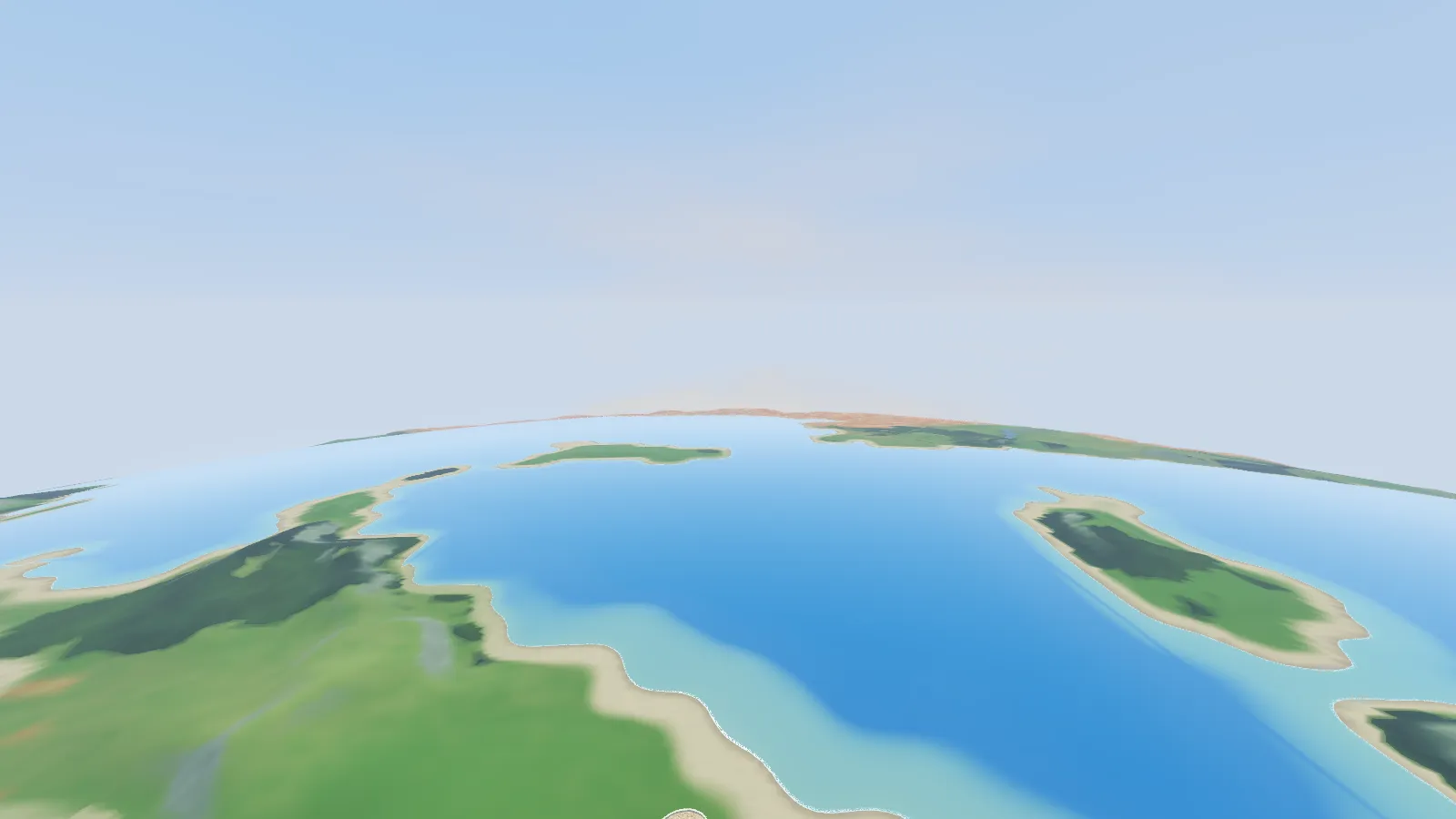
The Earth has a sea: about 71% of it, the real Earth's since 2026-11-25 (see The real Earth; it was 40% on the made-up one, for more land to walk). Its surface is a sphere 30 m under the mean radius; it never runs dry (to the water it is a source, as a river is), so a channel dug from the coast below its level floods. Where land and sea are follows one slow field (roughly the distance from the shore): continents tens of kilometres across, archipelagos of islands in some of the shallower seas, and atolls in the warm seas (toward the equator from latitude 0.5, at least 3 km offshore): a ring of reef just awash round a shallow lagoon, with sandy islets on it and passes between them. The landing plains and the poles always lie on land (the landing point is 9 km and more from the sea; the nearest beach some 14 km).
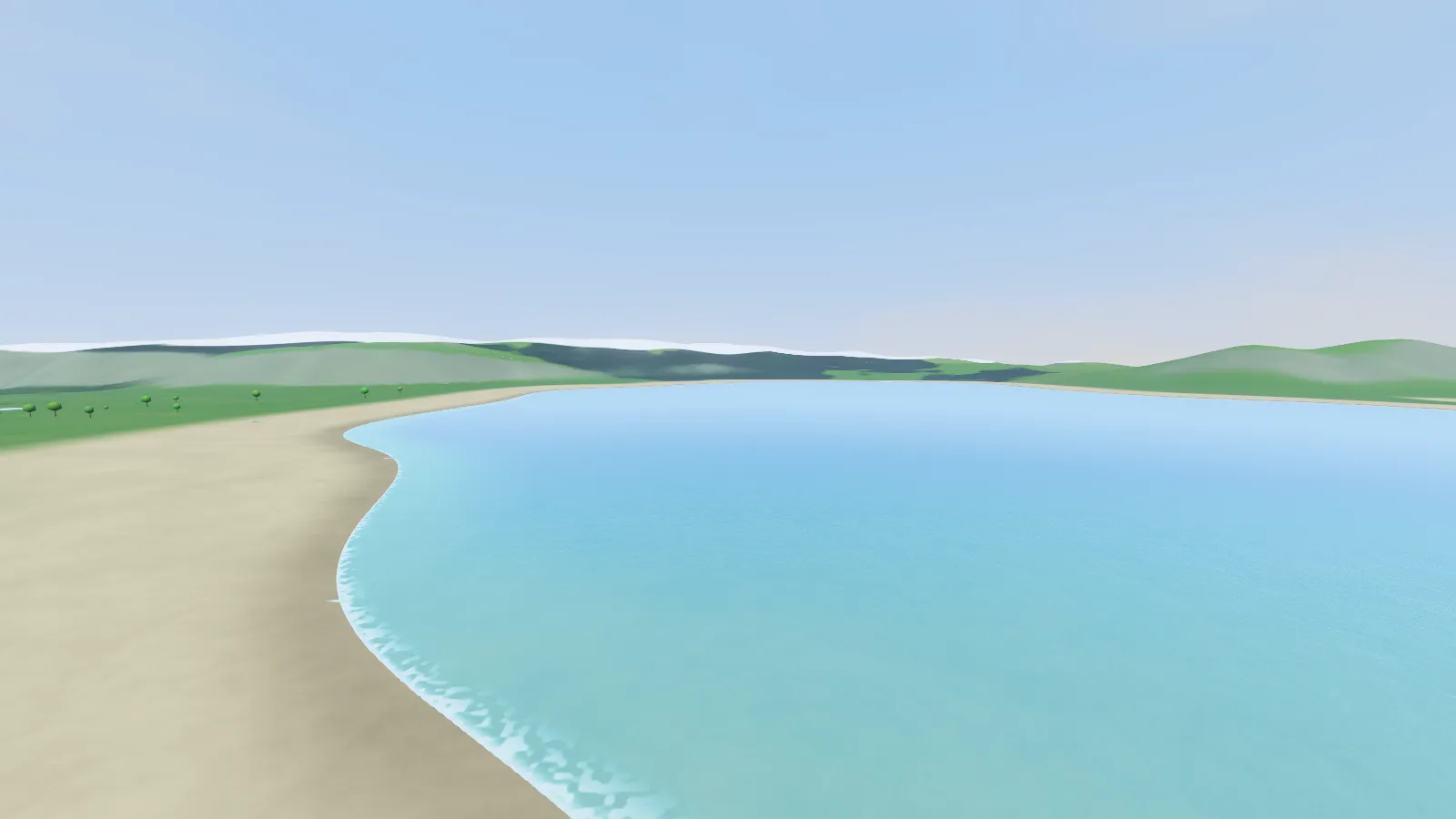
- Coasts: a beach of pale sand (70 m from the water's edge to where the land rises), or where the coast is rocky cliffs with no beach; under the water a gentle shelf (some 25 m deep 2.5 km out), a slope, and the deep floor 190 m down, of silt with banks and hollows.
- Inland the ground never lies lower than a few metres above the sea (what would be lower is flat coastal plain), so the sea's surface never shows inland. Rivers end before they reach the sea; lakes lie 2.5 km inland and more.
- Palms grow along the warm coasts (toward the equator from latitude 0.45), on beaches, islands and the islets of atolls; nothing grows under water or on the wet sand by it.
- Drawn: one surface round the camera out past the horizon, bent onto the sea's sphere: turquoise over sand, blue over the deep (the water's depth from the depth buffer), foam where it laps the shore, the sky in it toward the horizon. Lakes and rivers keep their own surfaces.
/tp earth ocean [altitude]goes out to sea.- Old saves: the ground changed under them; edits made where the sea now is stay where they were.
Rivers deeper, and water all along them (since 2026-11-23): a riverbed's floor lies 6 m under its banks (was 4), its water some 5 m deep in the middle (3.9 m at the shallowest; a little less on the lowest land, where the floor is kept above the sea's level). The floor follows the same swells as the water's surface and keeps only a fifth of the plain's small shapes and hillocks: before, they stood up out of the water in places (5 % of a river's middle dry, up to 2.7 m; 10 of 238 crossings of rivers over the Earth). A river cuts its whole valley until the country is mostly mountain, desert or ice (green under 30 %), and ends there in a short way: fading over the long blend of the biomes, its valley was cut only in part, and hills stood up out of its water, the river gone for a stretch and on again beyond. Rivers therefore reach somewhat further into hill country.
Rivers from afar (since 2026-11-28): the water's surface is drawn
within 1 km; past it, and on ground of 8 m cells and coarser, a river is a
blue line in the ground's colour, as wide as the river or a cell of the
ground, whichever is wider, in the water's own shade. Before, the line
began only at 16 m cells and was the width of the bed alone: the vertices
of coarse ground missed it (from altitude, a dashed line of dots), and
where the surface ended short of that the river stopped in a straight cut
and ran on as a dry channel. (--autotest --terrainlodshots.)
The Terrain Blower (since 2026-11-23): a drill run backwards, held in
hand like the borer (the item): LMB held
packs a ball of earth (1.2 m) where it is aimed, its middle
on the ground, one every 0.3 s, in the borer's reach (4 m). Aimed close by
one's feet, the ball is smaller to fit beside one (down to 0.5 m), then
pushed further off; never over a player or a grid. In survival each blast
takes a cube of stone from the inventory (none: it blows nothing, and says
so). The sandbox puts it on hotbar slot 9; an assembler makes one (a motor,
two steel plates, a nozzle, two copper wires). Its model is built as a leaf blower is, each
part a closed solid set into the next (no plates standing loose, nothing
poking through): a dark ball at the wrist (as the elbow's), a big round fan
housing across the tool with a dark hub proud of each face, and out of the
housing's lower edge (as a volute's outlet leaves it) the orange tube,
widening and flattening to a broad mouth with a dark rim and a dark
opening; a red trigger set into the tube's top, and a black hose (round
lengths with a ball at each bend) from the housing over the tube to a clip
near the mouth. While it blows, a stream of earth and dust runs out of the
mouth, widening, streaks and rings of it moving outward and fading. --blowershots looks at the model
alone from 24 sides, in hand at rest and at work, and on
the figure.
First-person arm (since 2026-11-23): at rest the arm hangs by one's
right side, turned out from the shoulder (34°, and a little down), its tool
pointing ahead clear of the crosshair; at work (the borer, the torch or the
blower while its button is held) the whole arm swings in from the shoulder
toward the middle, 60 % of the way (the tool a little
short of the crosshair), and out again when
let go (in quickly, out more slowly: no swinging between two cuts). The
weapons' arm is as it was, along the line of fire. (--handshots: every
tool at rest, and the borer, the torch and the blower at work.)
The airfield's runway is straight (since 2026-11-23): one line from its start to its end, rising or falling evenly (at most 1 in 100, fitted to the ground), its 40 m pieces meeting edge to edge on it (1 cm at most) and following the planet's curve. The ground is levelled to its top first, cut and filled: along it and 32 m either side (the Albatross's wings), and out to the apron where the other planes stand, so that they roll onto it; then blended back to its own lie over 40 m. (Before, each piece was laid on the ground at its own middle, and the runway stood in steps of up to a metre.) The planes and their stairs stand on the ground as it is now, levelled. Putting it up takes some 0.15 s.
Structures put on the ground clear it (since 2026-11-23): what a
command puts up on a planet (/airfield, every park of the Demo parks
menu) has the ground cleared out of its top cells open to the sky (a
runway, a floor, a pad) and 3 m over them, where the ground stands within
that: the airfield's runway, laid in 40 m pieces on the lie of the land, no
longer has the ground standing up through it. Not under the tops (inside
walls and foundations, where none sees it) nor over a top buried deeper
than the 3 m (something put under ground on purpose). The towns' and
landmarks' buildings the same, a little each step after they go up (2 ms
of a step at most): the dunes against the pyramids at Giza. Points of
interest are left half-sunk, as they are meant to be. The clients are sent
the chunks changed whole.